Subtotal $0.00
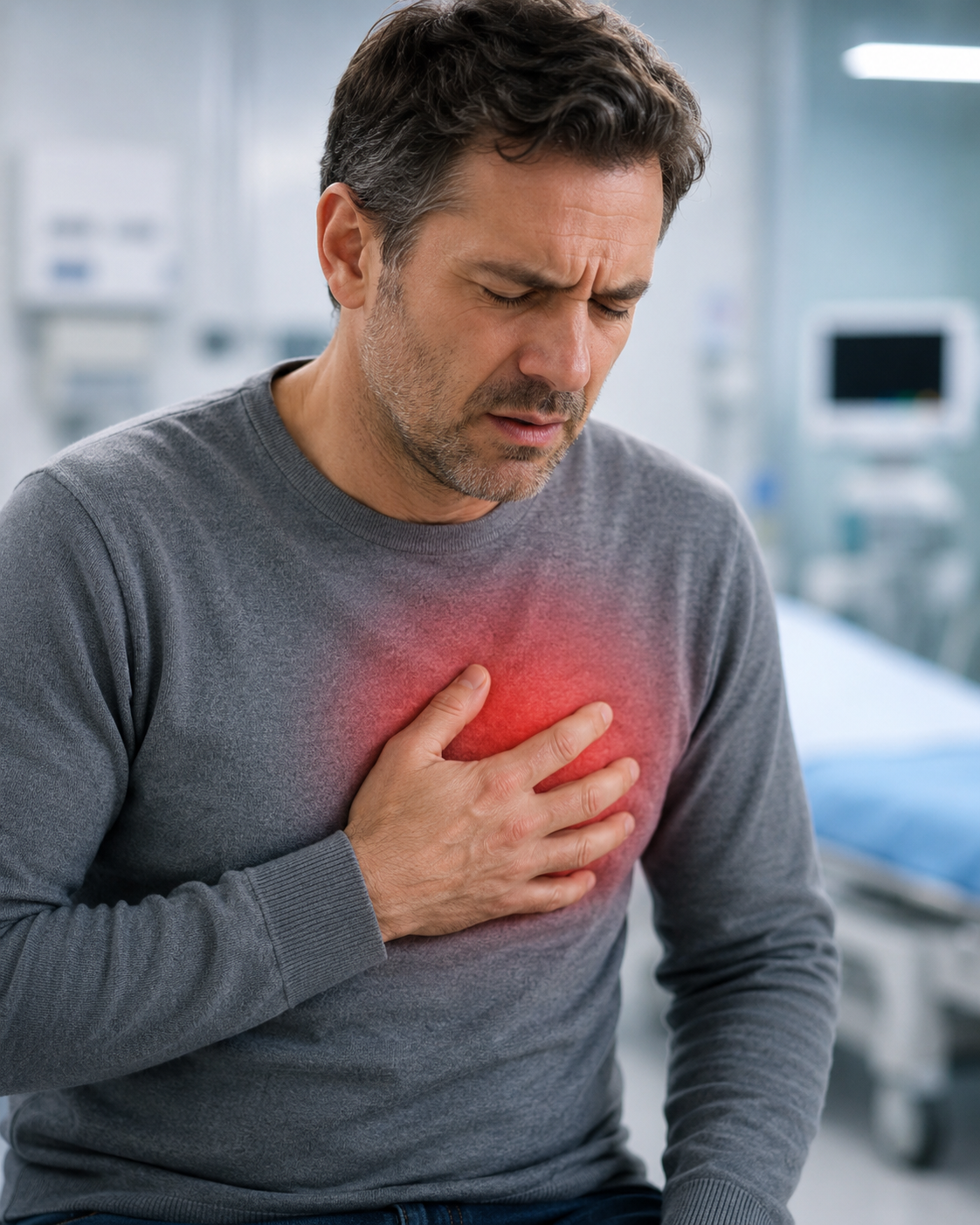
Chest tightness
Heaviness, tightness or squeezing in the centre or left of the chest.

Find out today whether your heart is behind it. Chest pain has many causes and only some are cardiac, so chest pain treatment in KPHB begins with a proper diagnosis. At Gokul Heart & Cholesterol Clinic, KPHB Colony, our interventional cardiologists carry out a full chest pain evaluation using ECG, 2D Echo, TMT and blood markers, then treat what they find.
Mon – Sat 9:15–10:00 AM & 6:00–9:00 PM · Sunday 10:00 AM – 1:00 PM (By Appointment)
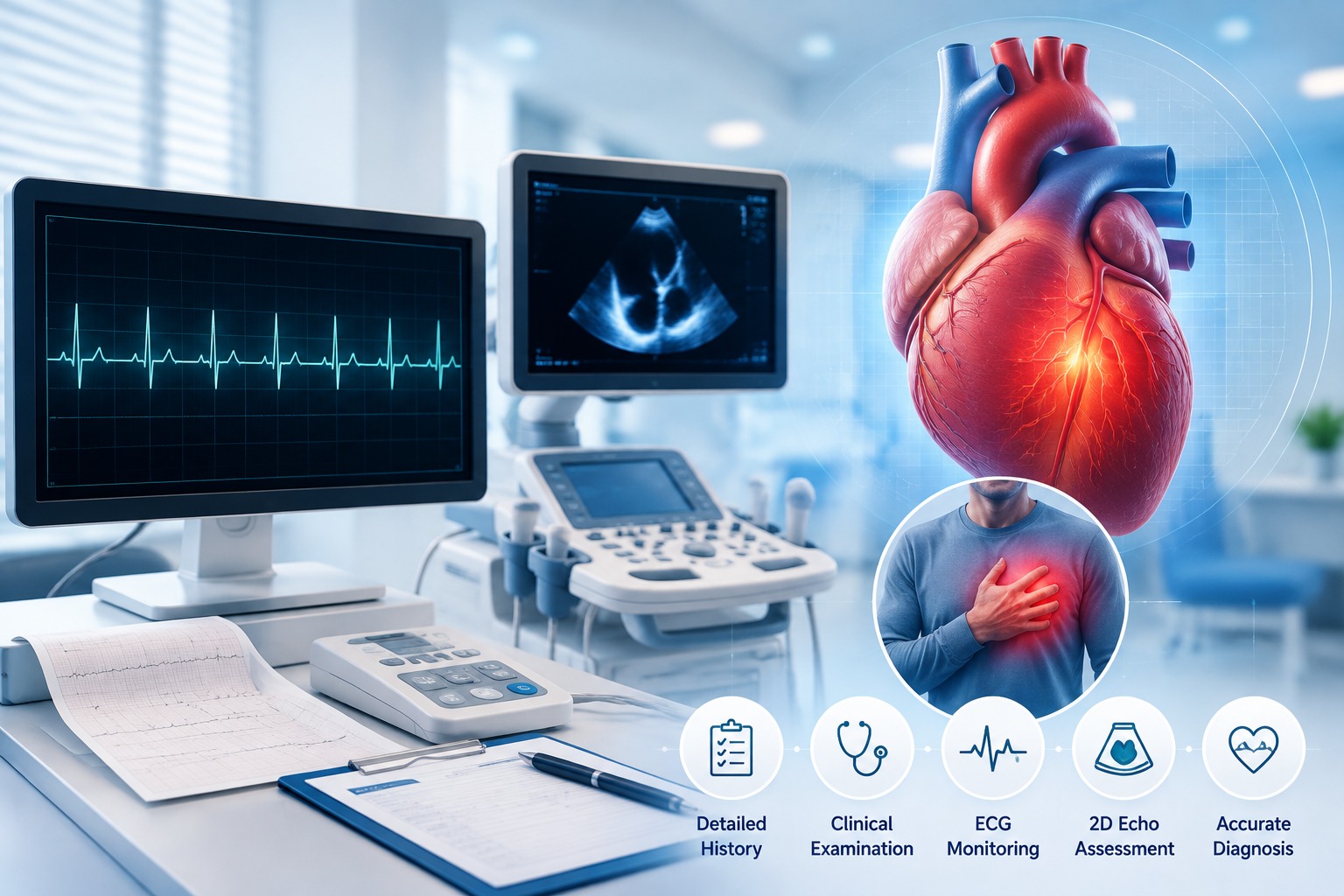
A chest pain evaluation answers one question: is your heart causing this pain? A cardiologist takes your history, examines you, and tests the heart's electrical activity, pumping function and blood supply.
The same discomfort can come from the heart, the stomach, a chest muscle, the lungs or anxiety. Chest pain treatment in KPHB starts with knowing which — the reason most people look for a chest pain specialist in Kukatpally rather than wait it out.
At our KPHB Colony clinic, interventional cardiologists run the evaluation themselves. Your ECG and 2D Echo are read by the same specialist who would treat the problem, usually in one visit, continuing as a coronary artery disease evaluation where the findings call for it.
If you are asking whether your chest pain is heart related, start with the pattern rather than the location. Cardiac pain is more often a pressure than a stab, it rarely arrives alone, and the symptoms accompanying it carry as much information as the pain itself.
Heaviness, tightness or squeezing in the centre or left of the chest.
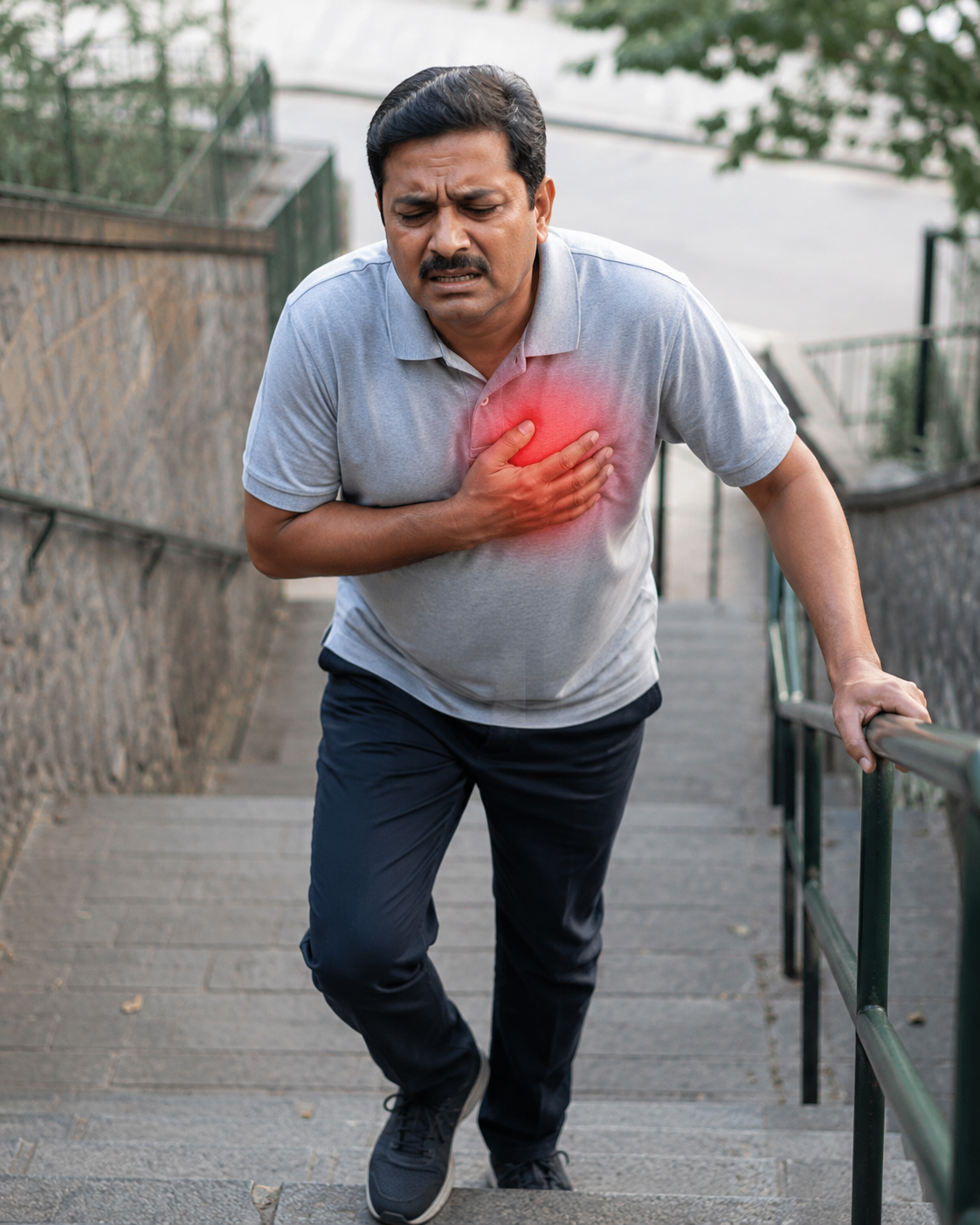
Discomfort that starts on exertion, walking uphill or climbing stairs.
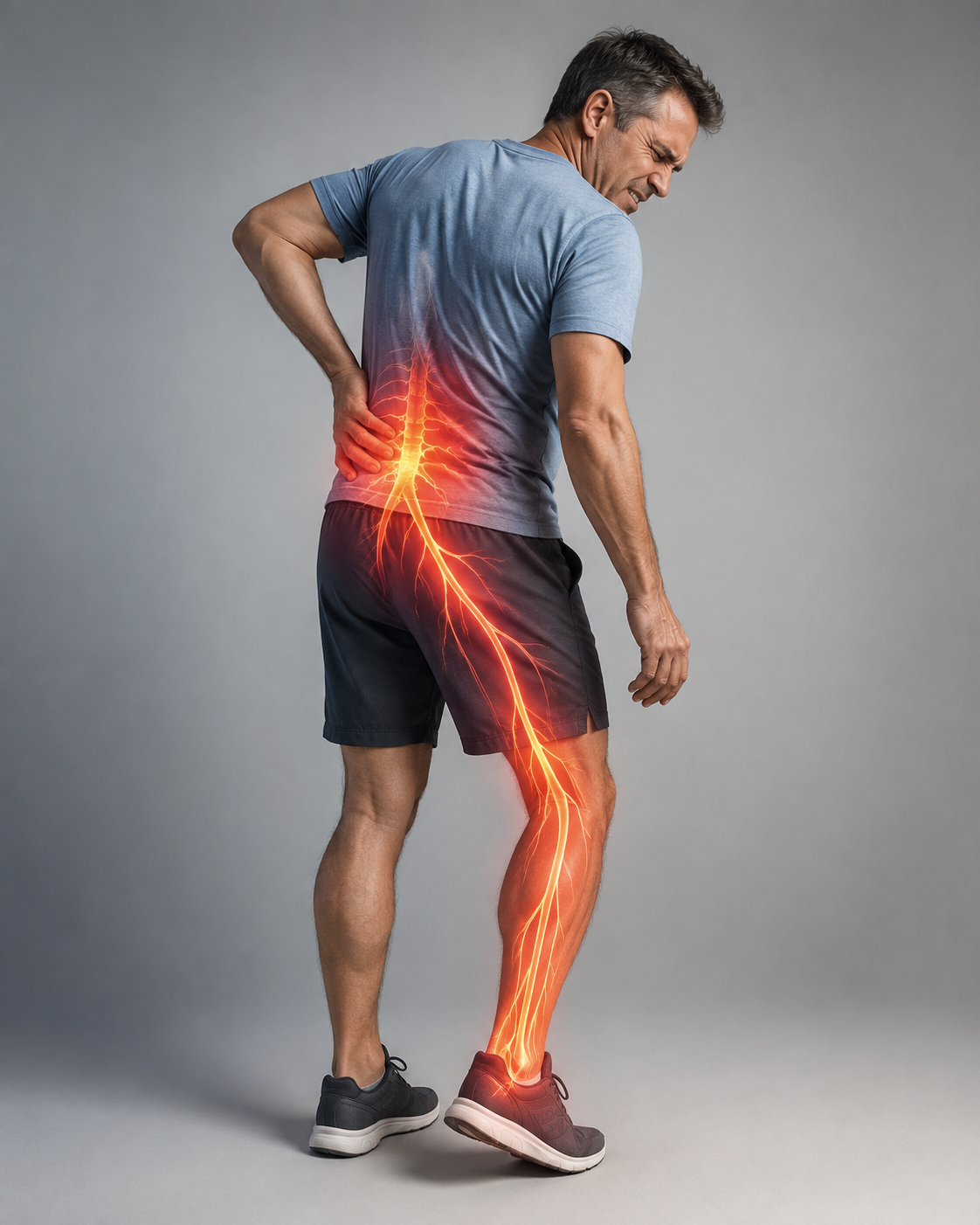
Pain that spreads to the left arm, shoulder, jaw, neck or upper back.

Shortness of breath on mild activity, or while lying flat.

Fluttering, thumping or a racing heartbeat.

Tiredness and a noticeable drop in exercise capacity.

Sweating, giddiness or a feeling of unease alongside the pain.

Swelling of the feet or ankles.
Most patients arrive having already named their problem. The chest pain vs gas pain difference is the one people get wrong most often, and the wrong label is what costs weeks.
Pressure or heaviness in the chest after eating
Can be reflux, but exertional heaviness with this pattern is often angina
Burning behind the breastbone
Usually acid reflux, but overlaps with cardiac pain often enough to need an ECG
Any severe chest pain
A myocardial infarction is a blocked artery. Angina is reduced flow without a completed block
Used interchangeably with heart attack
Different events. Cardiac arrest is the heart stopping. A heart attack can trigger it, but they are not the same
Something needing immediate surgery
Most narrowing is graded. Many blockages are managed with medication alone, not a stent
A vague sense of cardiac trouble
Usually refers to reduced ejection fraction, which a 2D Echo measures precisely
Any chest discomfort assumed to be cardiac
Useful instinct, imprecise term. Heart pain treatment differs completely depending on whether the cause is angina, arrhythmia or a valve problem
The procedure to open an artery
The correct term is a stent, placed during angioplasty (PTCA)
Cardiac chest pain almost always comes down to one thing: the heart muscle is not getting the blood supply it needs for the work it is being asked to do.
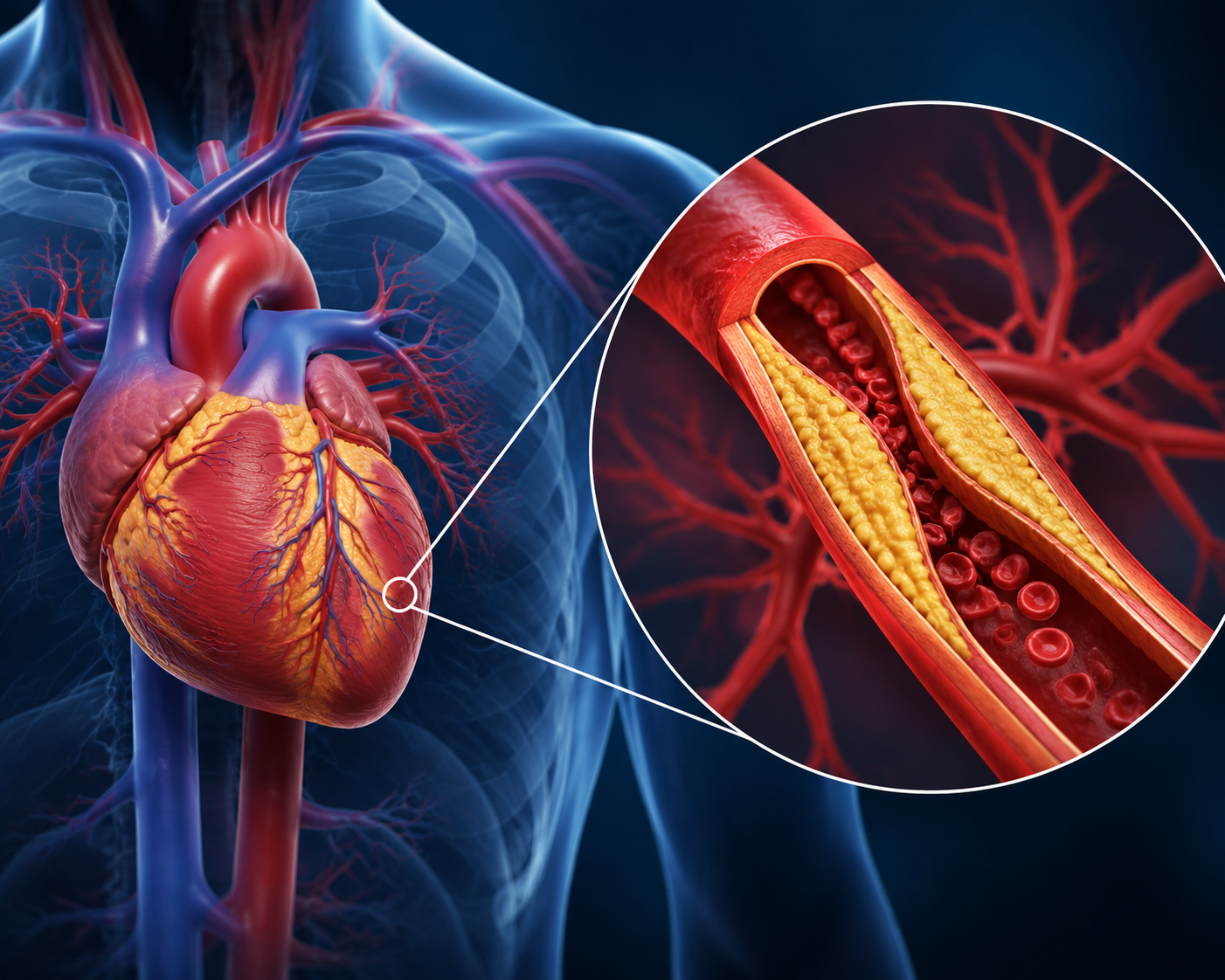
Cholesterol plaque builds up inside the arteries supplying the heart and narrows them. Blood flow is adequate at rest but falls short on exertion, which is when the pain appears.
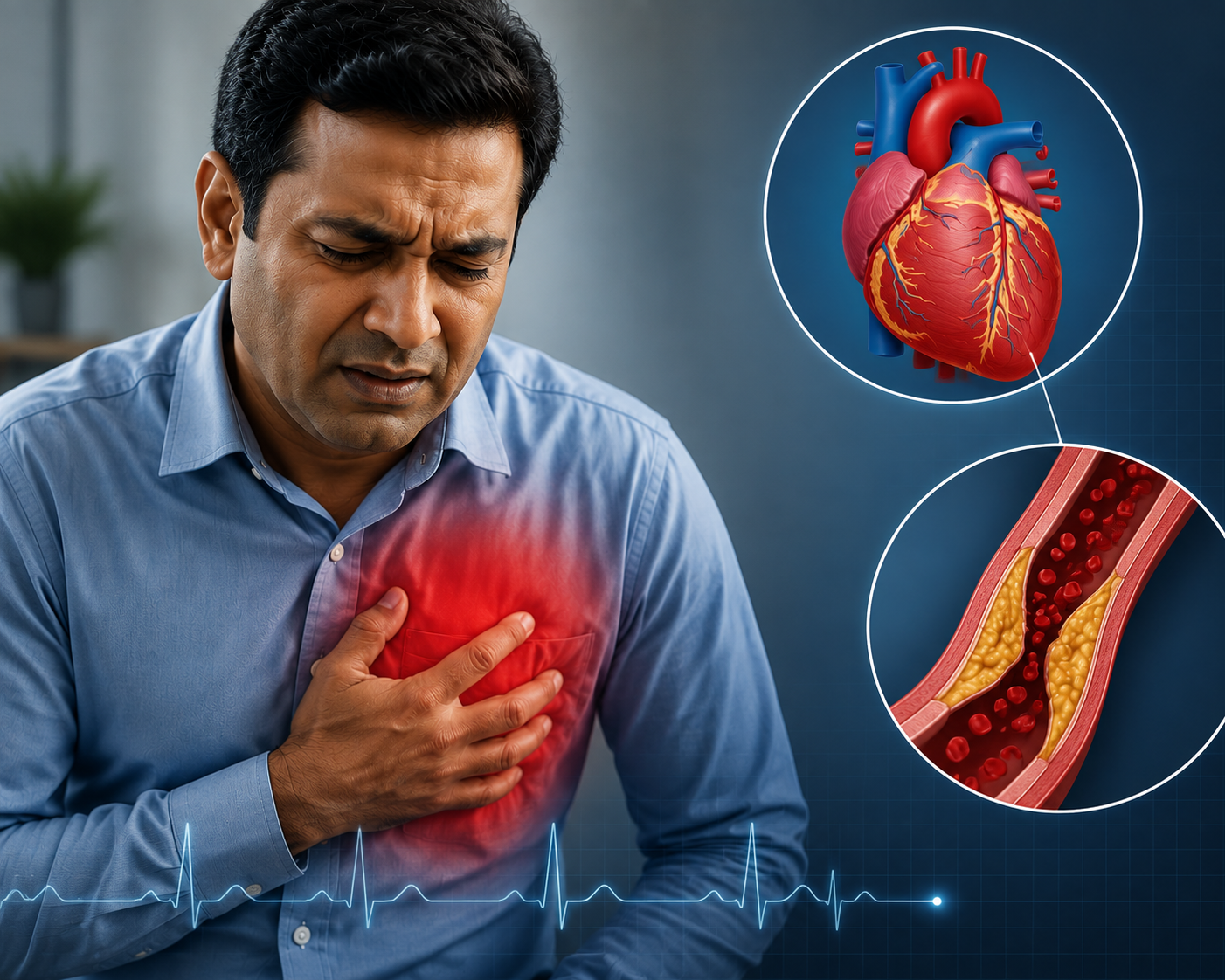
The symptom produced by that shortfall. Stable angina follows a predictable pattern with exertion. Unstable angina comes at rest or worsens quickly, and needs urgent assessment.
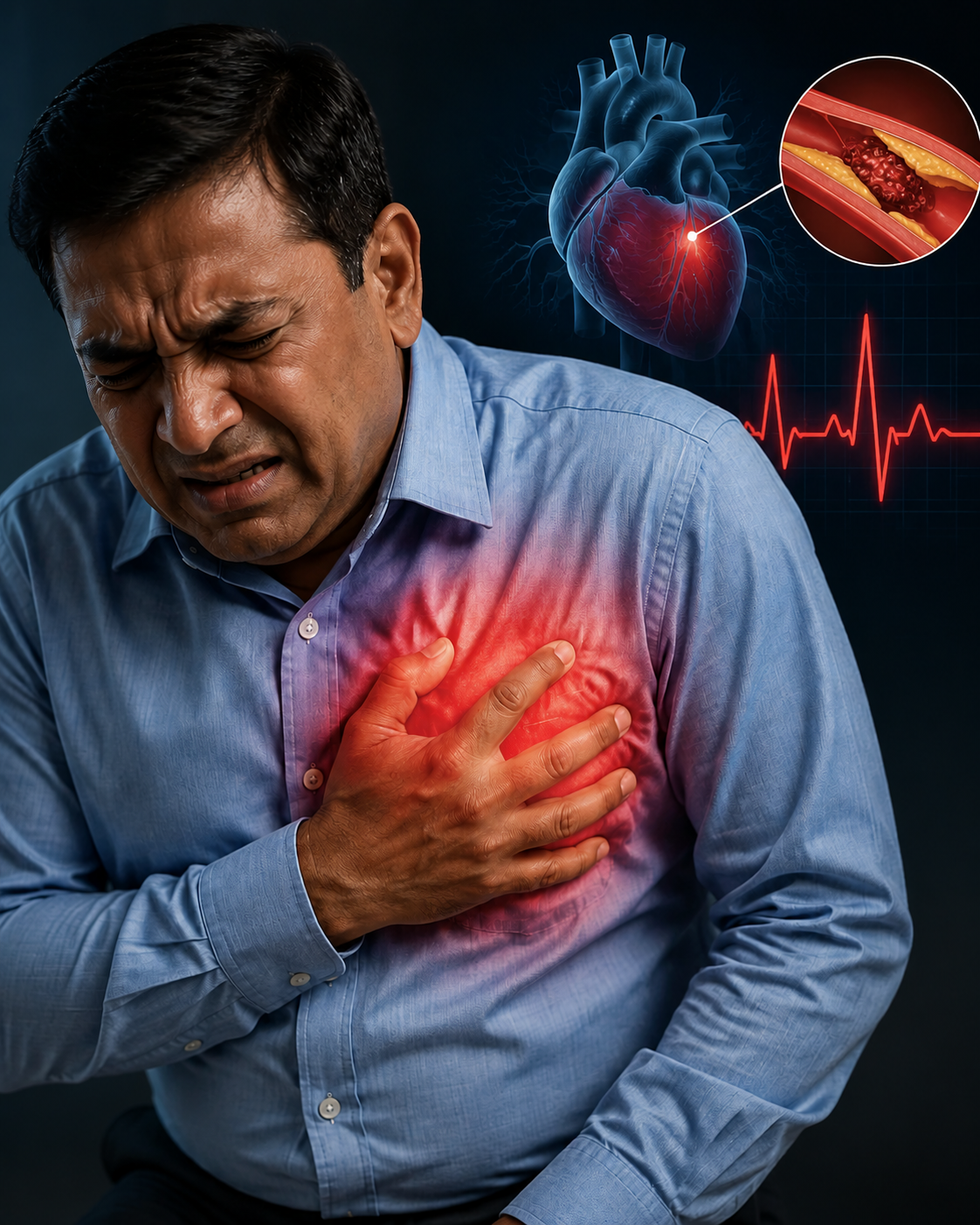
A plaque ruptures and a clot blocks the artery completely. Heart muscle begins to die within minutes. This is a medical emergency, not a clinic visit.
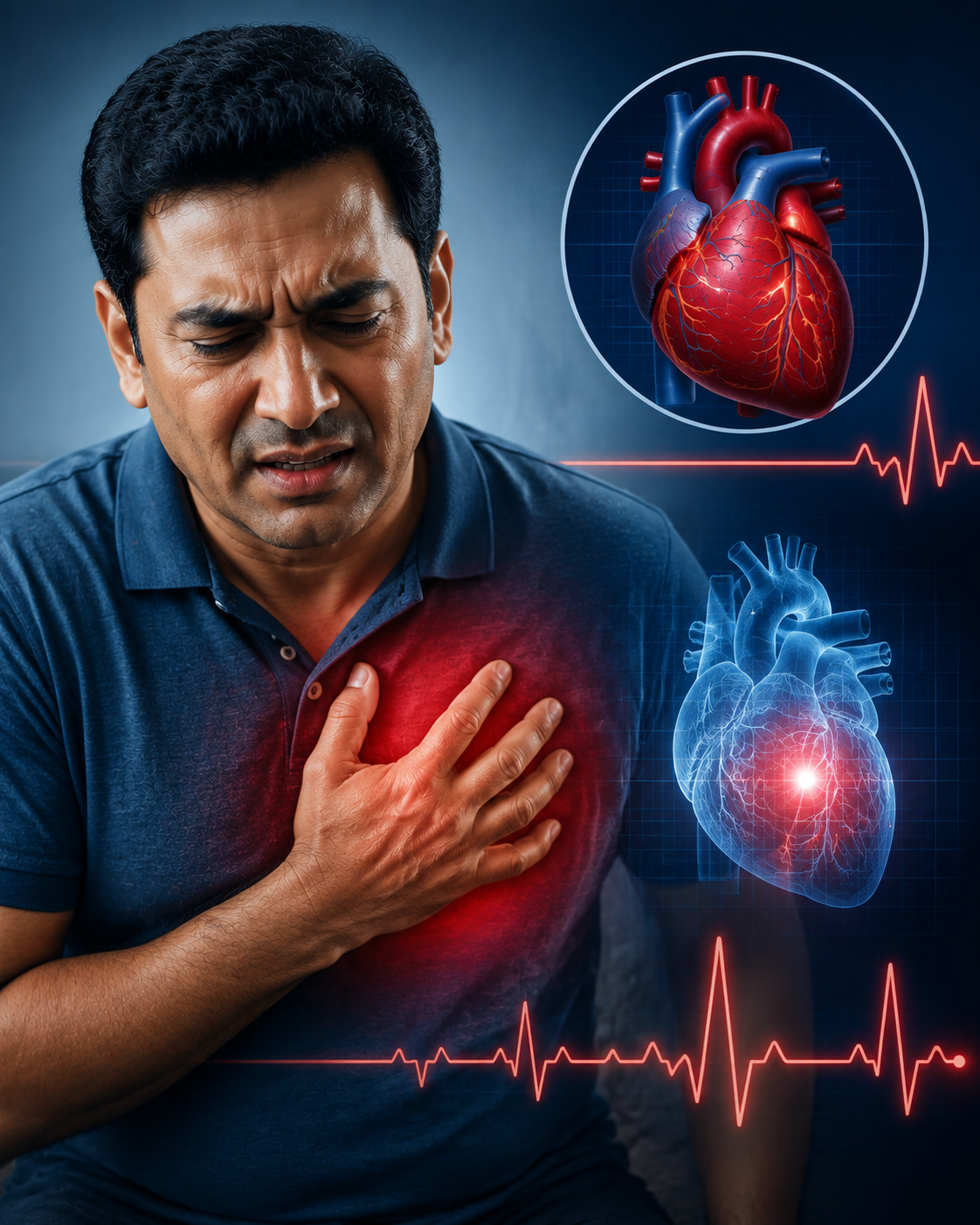
An irregular or very fast heartbeat reduces pumping efficiency and can cause chest discomfort, fluttering, dizziness or near-collapse.
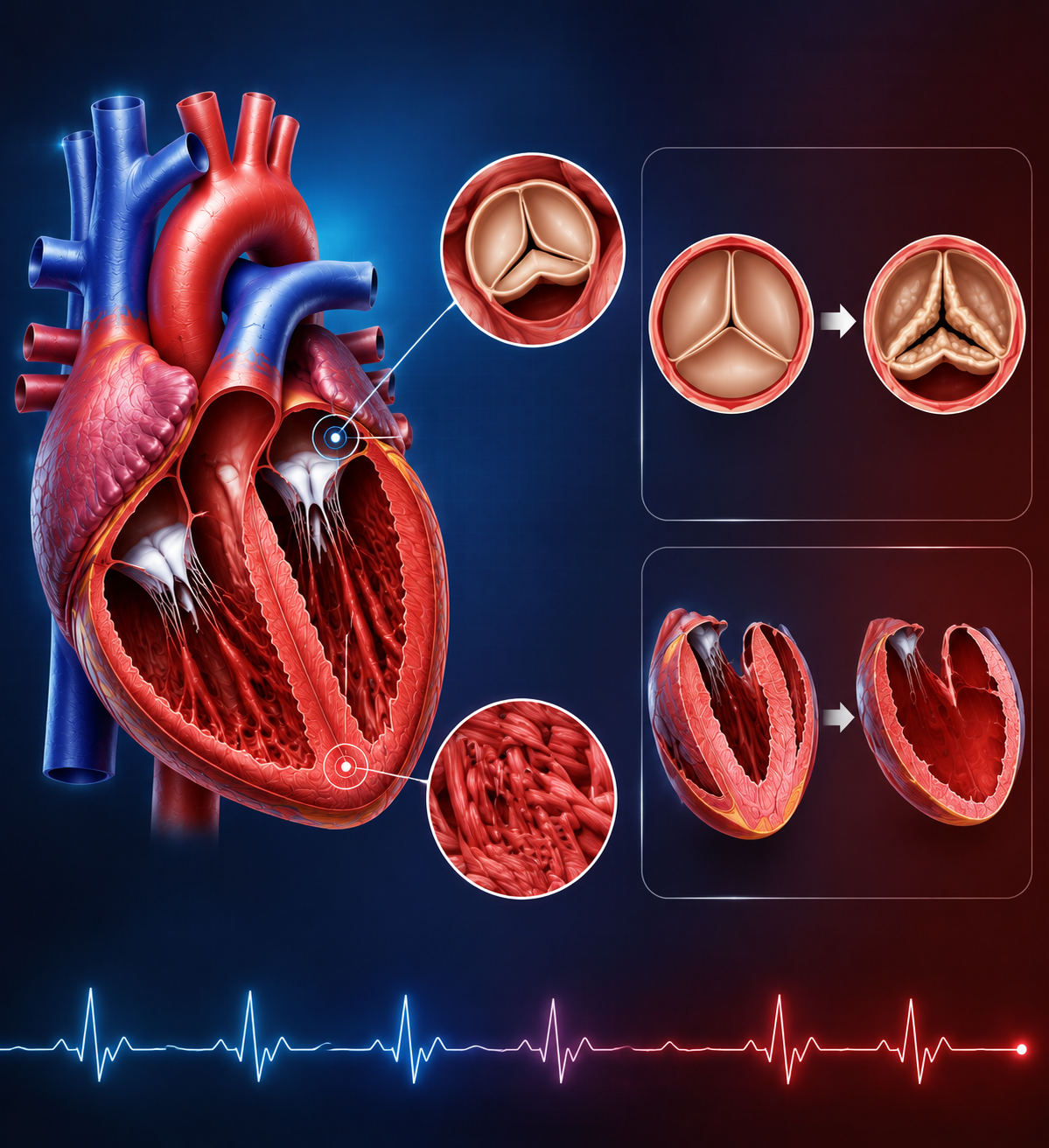
A narrowed or leaking valve, or a thickened or weakened heart muscle, forces the heart to work harder than its blood supply allows.
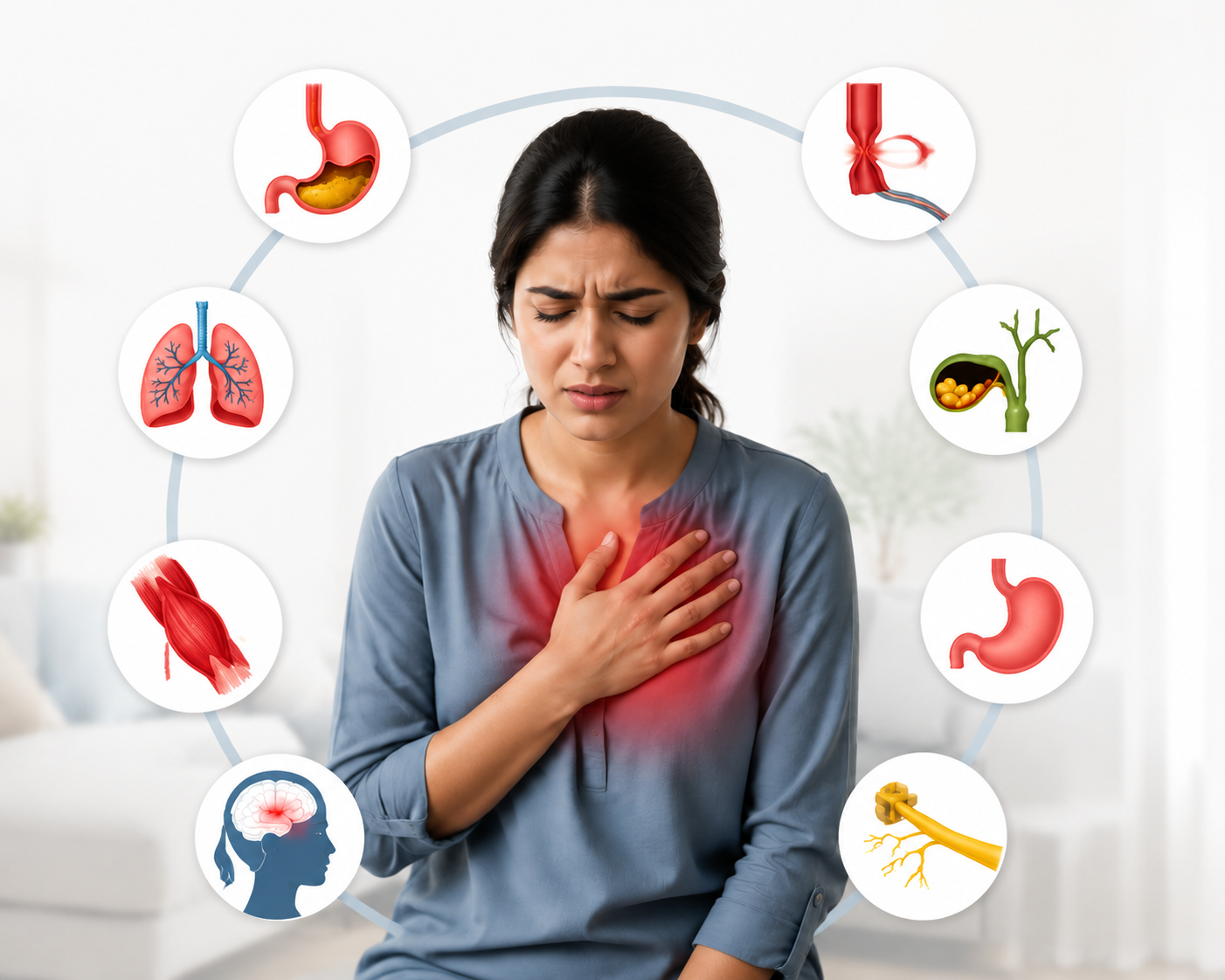
Acid reflux, muscular strain, costochondritis, lung conditions and anxiety. If your heart is clear, we tell you so and direct you to the right specialist.
The ECG and TMT test for chest pain in KPHB, along with 2D Echo, are all done in-house, in five steps ordered so that each test is chosen on the findings of the one before it.
The cardiologist maps the character, timing and triggers of your pain, then reviews your blood pressure, sugar, cholesterol, tobacco use and family history to establish your actual risk level.
A resting electrocardiogram records the heart's electrical activity and picks up signs of ongoing or previous ischaemia and rhythm disturbances. Quick, painless, and the first test in almost every chest pain workup.
A 2D Echo for chest pain is an ultrasound scan of the heart showing pumping strength, valve function, chamber size and wall movement. Performed at our Kukatpally clinic, it reveals structural problems an ECG cannot detect.
A treadmill stress test shows how your heart behaves under exertion, which is often when hidden narrowing first appears. Troponin, lipid profile, HbA1c and thyroid tests are added where the history calls for them.
Direct imaging of the coronary arteries to locate and grade blockages. This is what determines whether medication is enough, or whether angioplasty and stenting are needed. We arrange and coordinate these at partner facilities.
Treatment follows the diagnosis, not the severity of the pain. Angina treatment, coronary artery disease and arrhythmia each take a different path.

Does more for your long-term outcome than any single procedure.
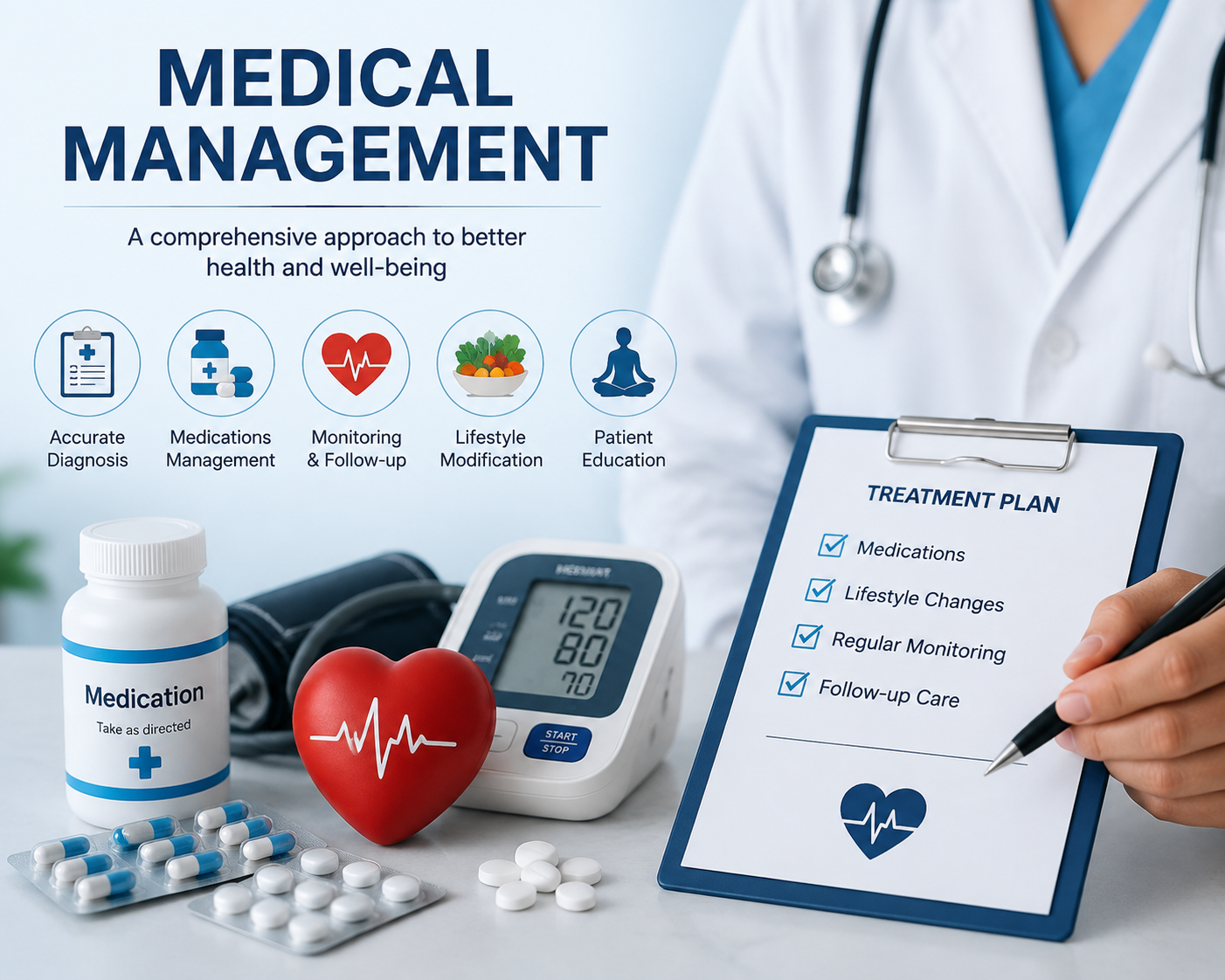
Where treatment starts for most patients. Stable angina usually responds to medication alone.
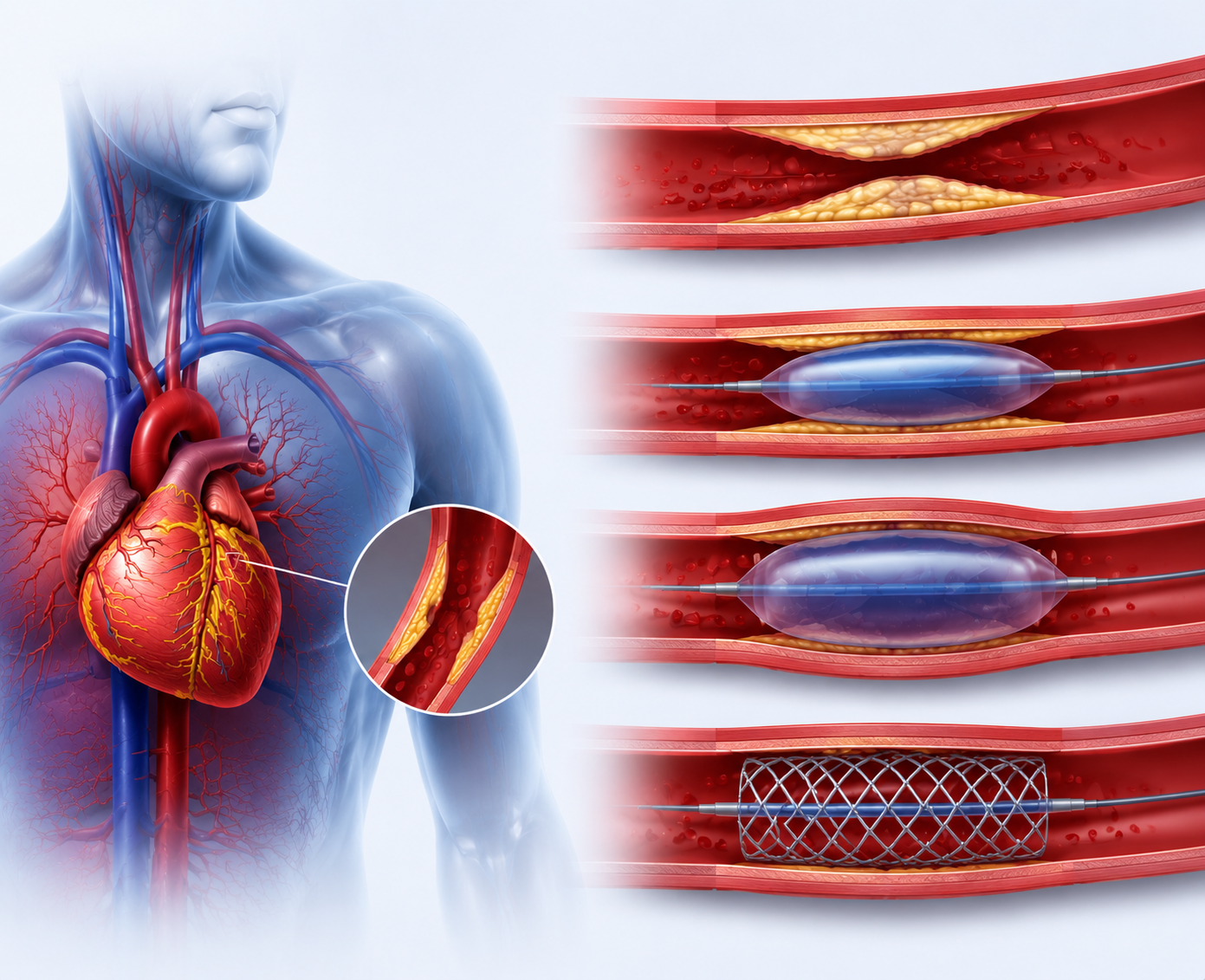
A balloon opens the artery, a stent holds it open. Local anaesthesia, home in a day or two.
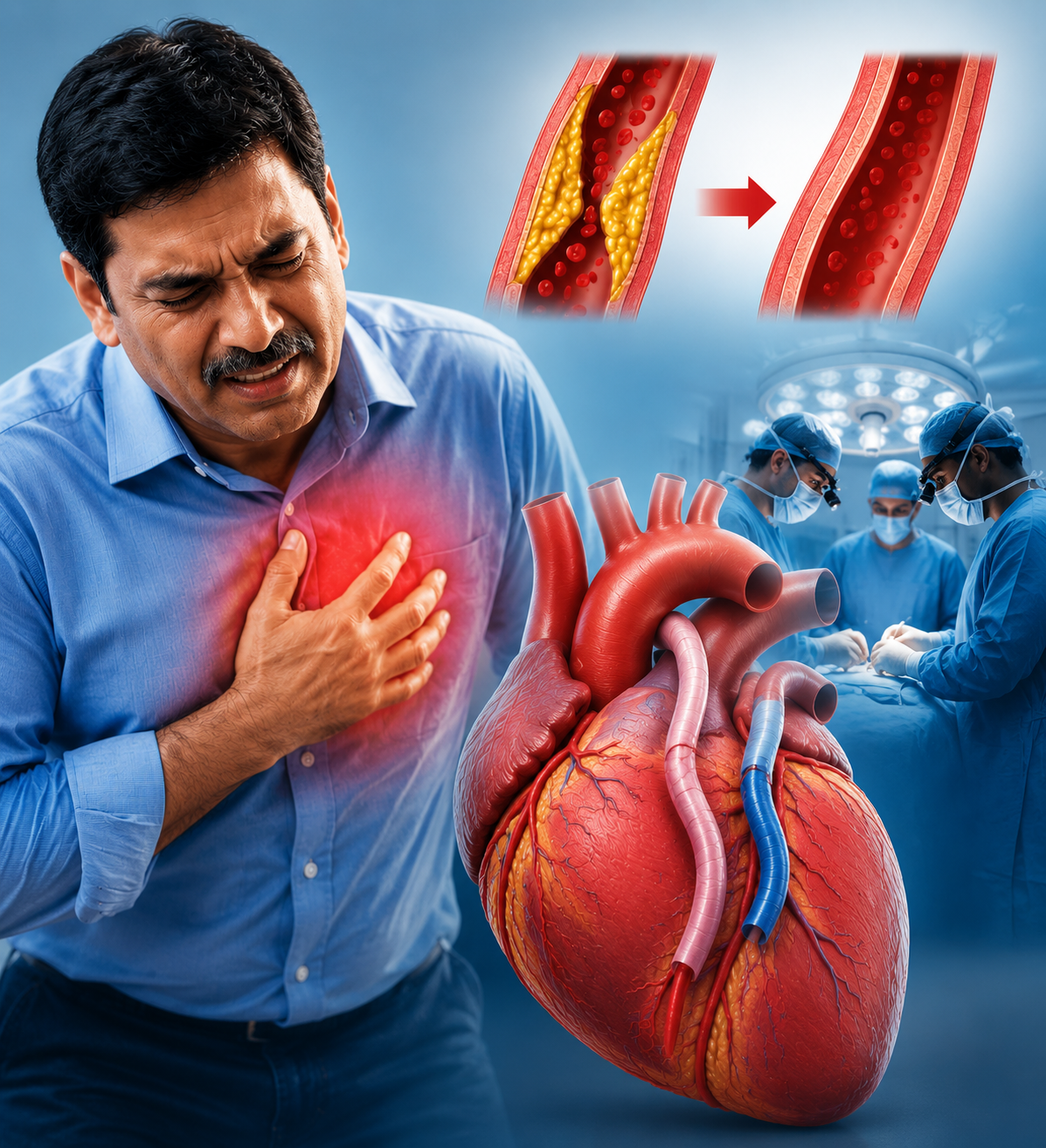
Multiple vessels, or a critical left main narrowing, do better with bypass than stents.
You do not need a referral to see a cardiologist for chest pain at our KPHB Colony clinic, and you do not need to wait until the pain is severe.
Your evaluation is carried out by the same interventional cardiologists who would treat whatever the tests find.

Senior Interventional Cardiologist — Gokul Heart & Cholesterol Clinic, KPHB · Senior Consultant Cardiologist, Apollo Hospitals. Formerly HOD of Cardiology at GEM’S Medical College.

Interventional Cardiologist — Gokul Heart & Cholesterol Clinic, KPHB. Gold medallist in DM Cardiology at KNR University of Health Sciences, and a specialist in cholesterol and hypertension management.
If you have been managing chest pain with antacids or ignoring it as "gas", one consultation can tell you whether your heart is involved. Book chest pain treatment in KPHB with our interventional cardiologists.