Subtotal $0.00
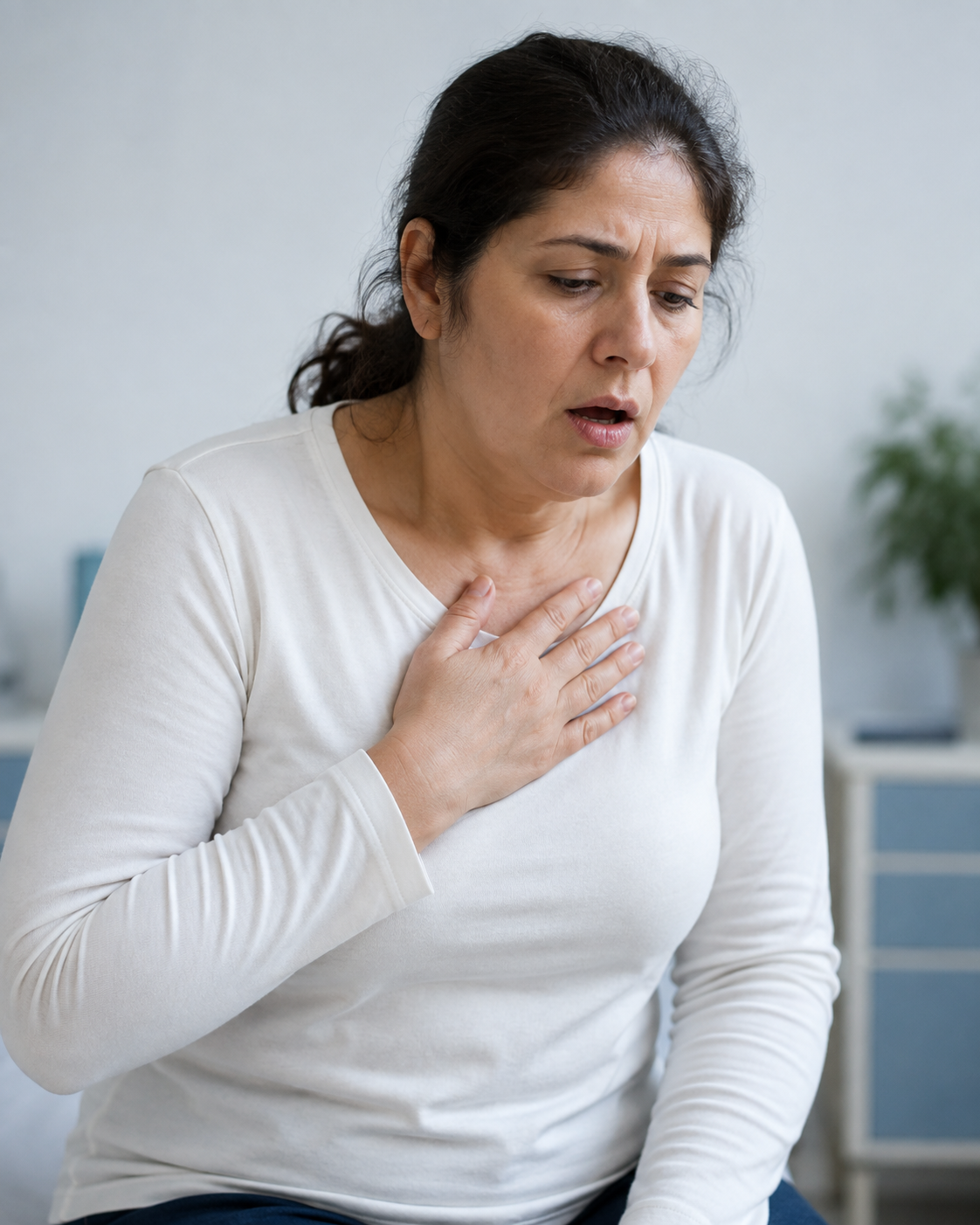
Breathlessness on effort
Climbing to the first floor now leaves you gasping. Earlier, the same climb felt easy.

Cardiomyopathy Treatment in KPHB starts with one honest number, your ejection fraction, not another tonic for tiredness that keeps returning. At Gokul Heart & Cholesterol Clinic, KPHB Colony, our interventional cardiologists grade the heart muscle using ECG, 2D echo and a full lipid profile, then treat what they find.
Mon – Sat 9:15–10:00 AM & 6:00–9:00 PM · Sunday 10:00 AM – 1:00 PM (By Appointment)
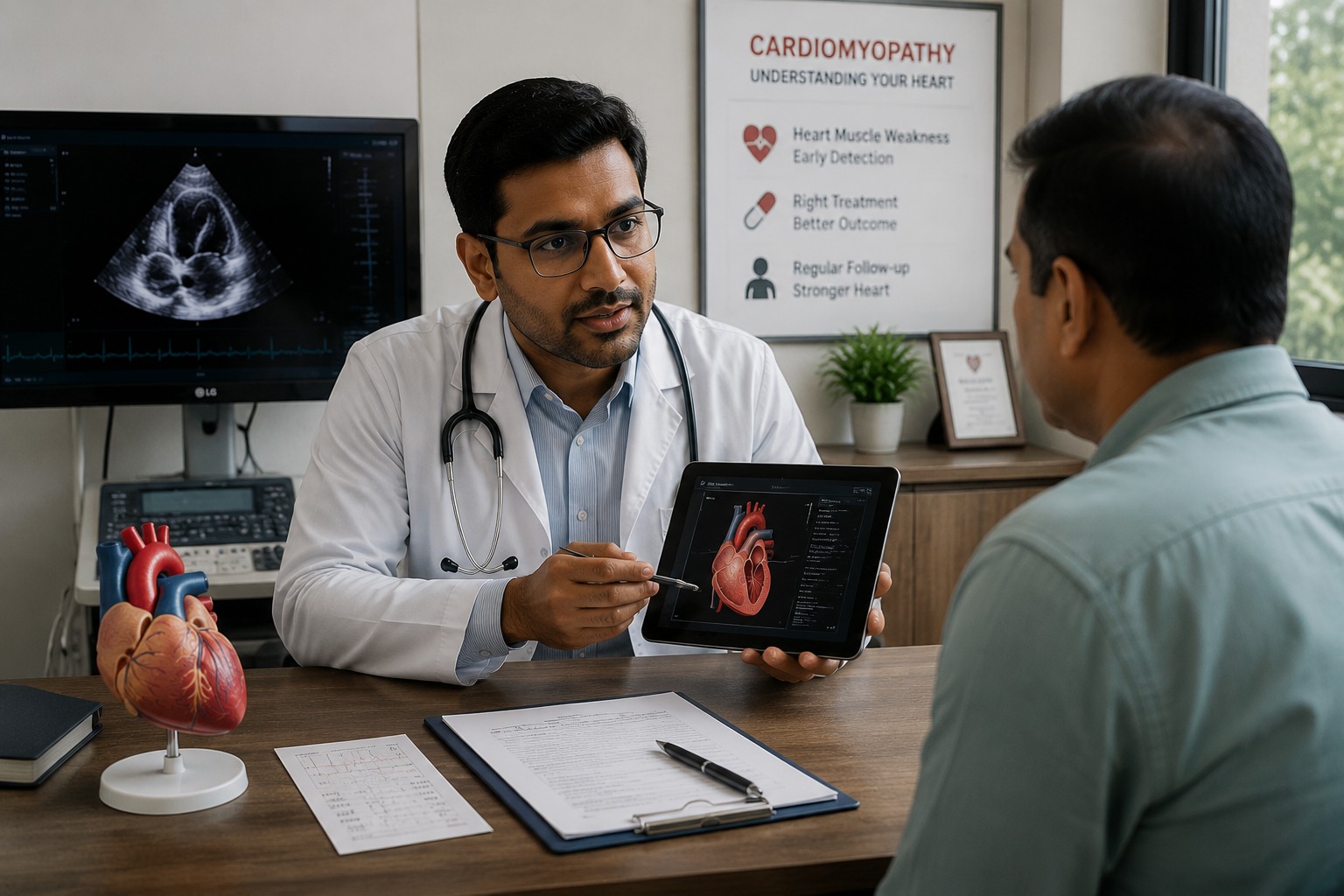
Cardiomyopathy Treatment in KPHB begins with one question: is the heart muscle weak, thick or stiff? A cardiologist takes your history, examines you, and reads your ECG, 2D echo and lipid profile to grade the damage precisely.
Breathlessness can come from the heart, the lungs, anaemia or anxiety. Knowing which is exactly why people look for a Cardiomyopathy Specialist in KPHB rather than simply live with it. Moreover, an early weak pump often recovers on tablets alone.
At our KPHB Colony clinic, the same cardiologists who read your echo also build your medicine plan and review it every few months. Where a device or advanced imaging becomes necessary, they arrange it through their hospital attachments and continue your cardiomyopathy management in KPHB here.
Feeling tired after a long day is normal. Breathlessness that worsens month by month, swelling that pits on pressing, or a blackout during exertion is not — that is worth a consultation.
Climbing to the first floor now leaves you gasping. Earlier, the same climb felt easy.

Daily chores drain you completely. Meanwhile, rest restores very little of that energy.
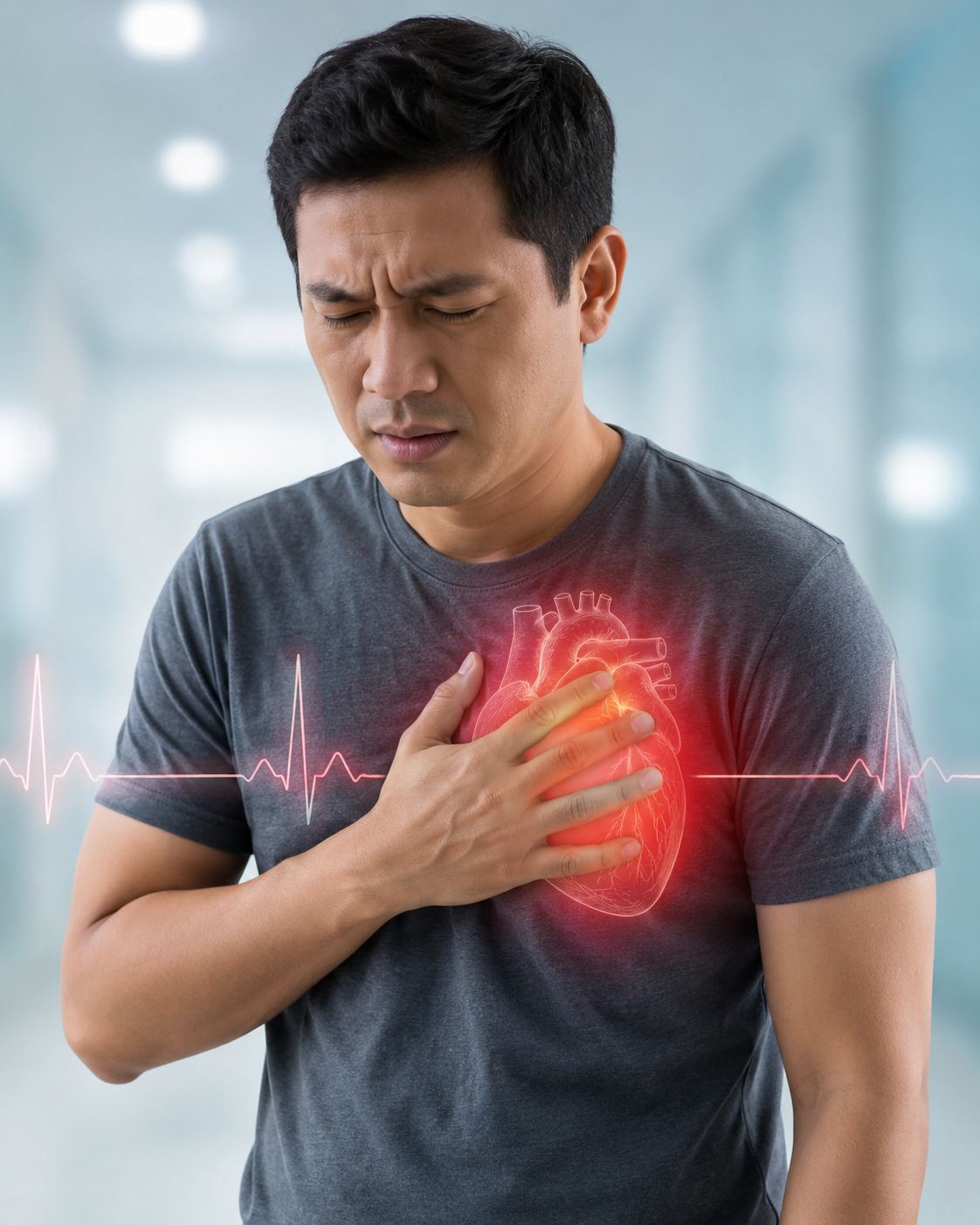
A racing, fluttering or uneven pulse that you can feel yourself, often without any trigger.
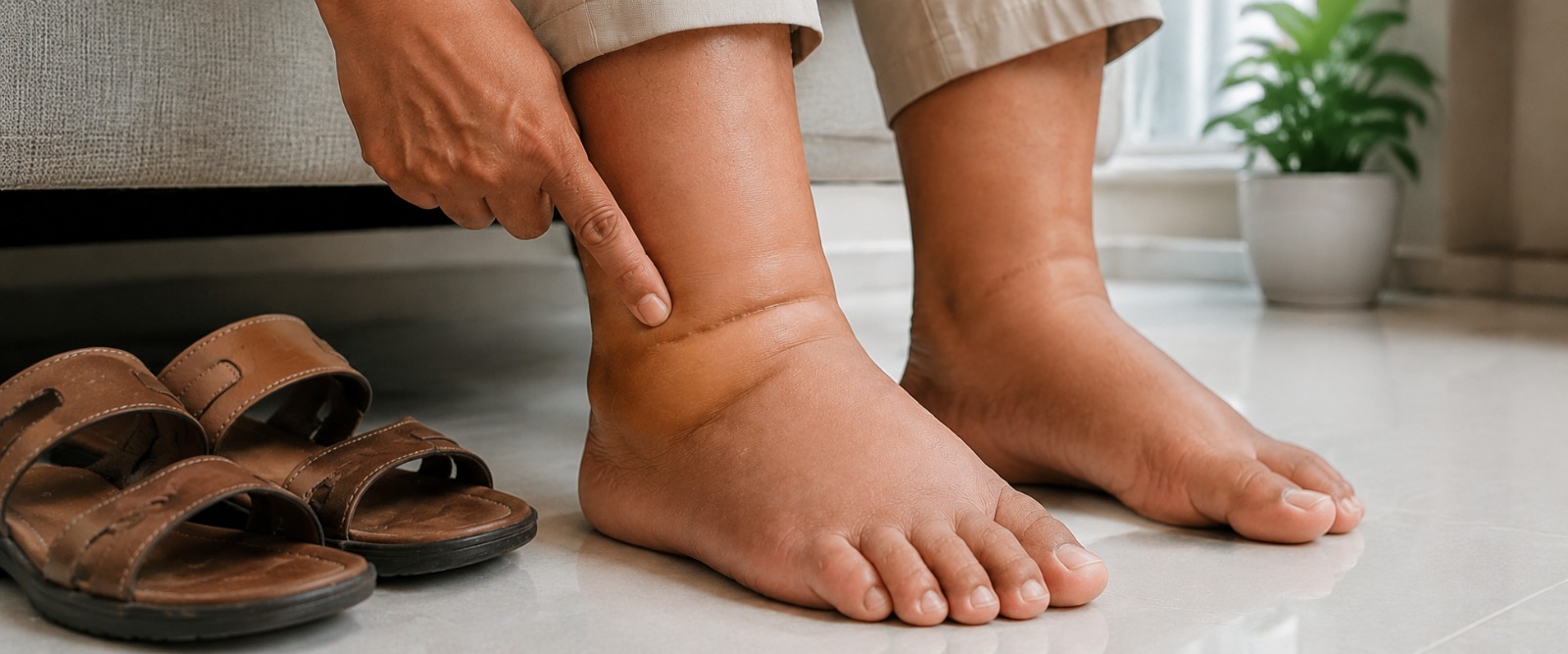
Your chappal strap cuts a deep line by evening. Puffiness that pits on pressing needs a review.
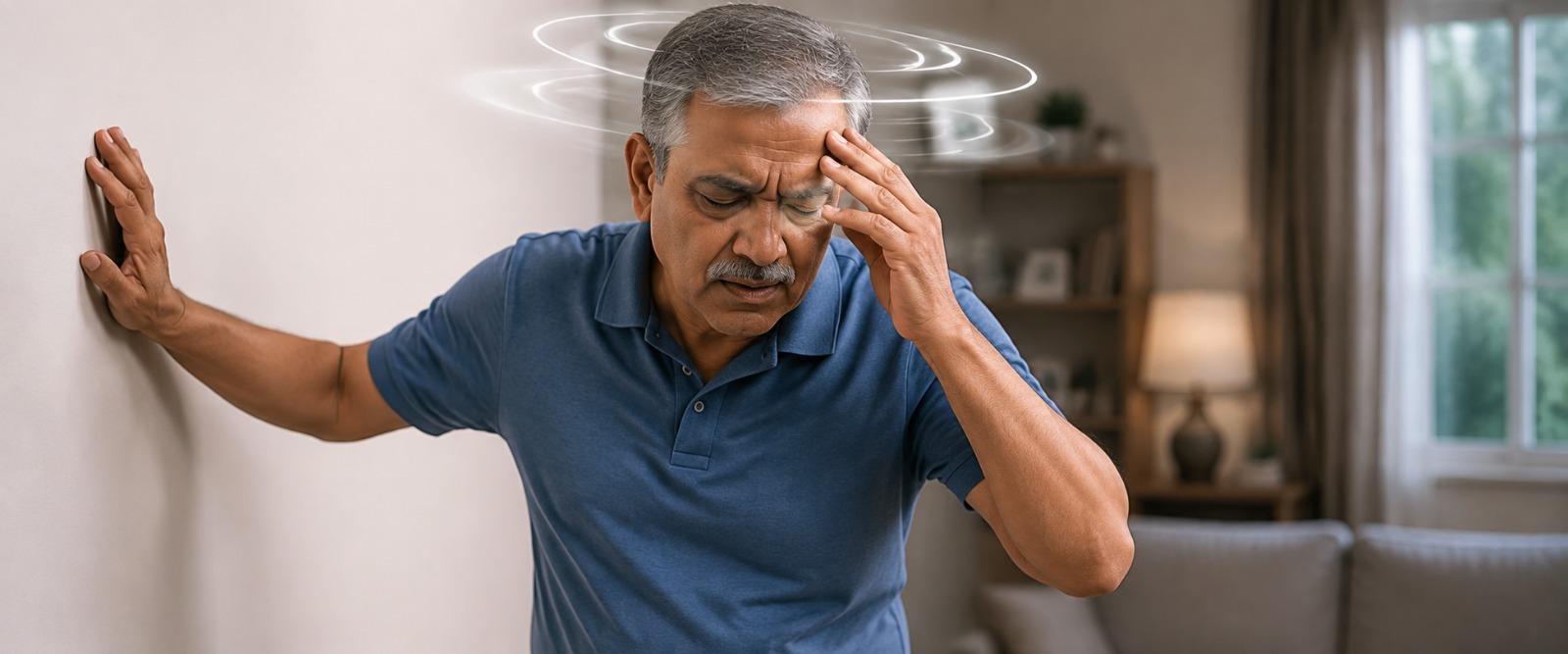
Giddiness on standing, or a blackout during exertion. Fainting while exercising always counts as urgent.

A dry cough that starts once your head touches the pillow. Usually, two pillows settle it temporarily.
Most patients arrive having already looked up half these terms. Getting the label right is what shapes the correct cardiomyopathy treatment in KPHB.
Loosely used for feeling low on energy
A measurable drop in pumping strength, graded precisely as an ejection fraction on a 2D echo
The number on the report nobody explained
Ejection fraction: the percentage of blood pushed out with each beat, normally 55 to 70
Assumed to mean a strong, athletic heart
A stretched chamber in dilated cardiomyopathy, which usually pumps weakly rather than strongly
Treated as a chest infection
Fluid backing up because the pump is failing; antibiotics do nothing, diuretics clear it
Heard as the heart about to stop
The heart still beats; it simply cannot keep up with demand. Most patients improve on tablets
Assumed to come only from gym work
Hypertrophic cardiomyopathy or years of untreated BP; both need very different treatment
Confused with a routine ECG
A recorder worn for 24 hours that catches rhythm problems a two-minute ECG misses
Assumed to be one and the same device
A pacemaker corrects a slow rhythm; an ICD stops a dangerous fast one and prevents sudden death
Identifying which of these apply to you shapes your entire treatment and prevention plan.
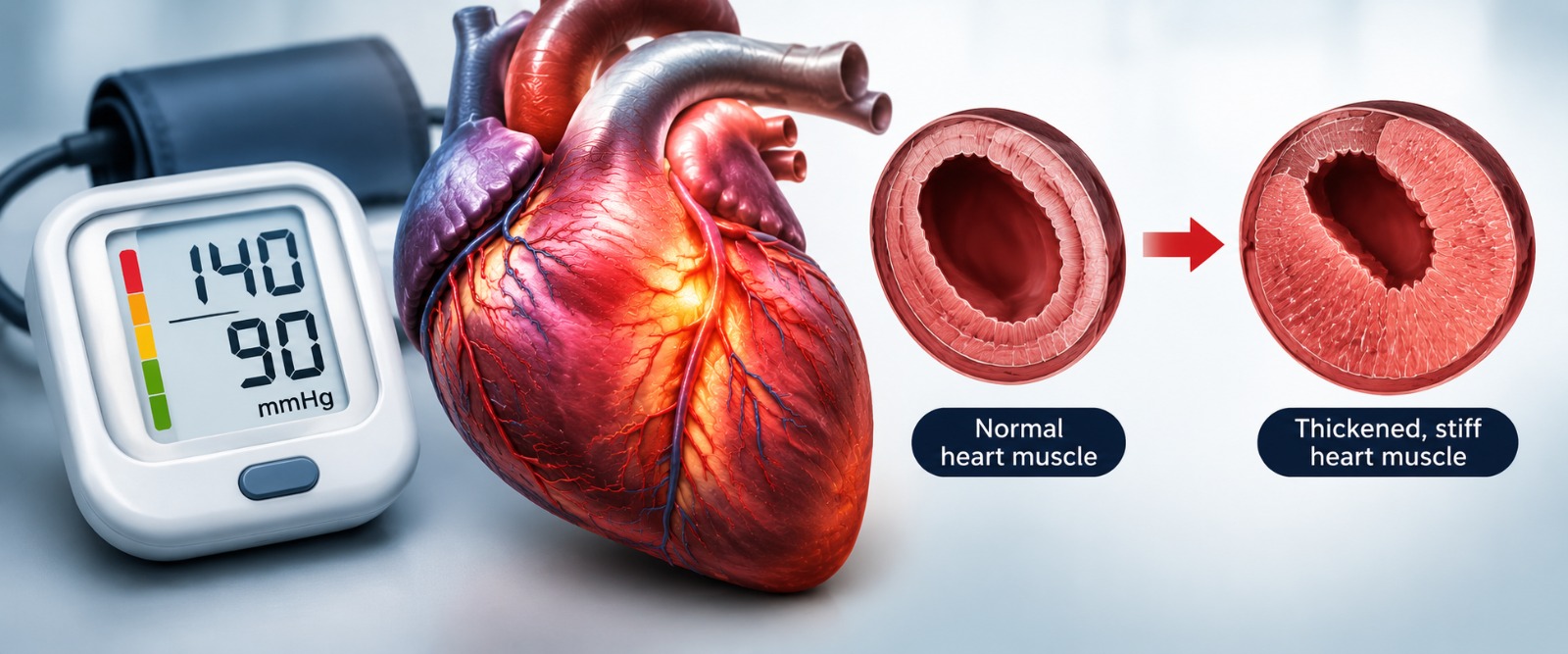
Years above 140/90 mmHg force the muscle to thicken, and it eventually stiffens. This remains the commonest cause we see in KPHB.
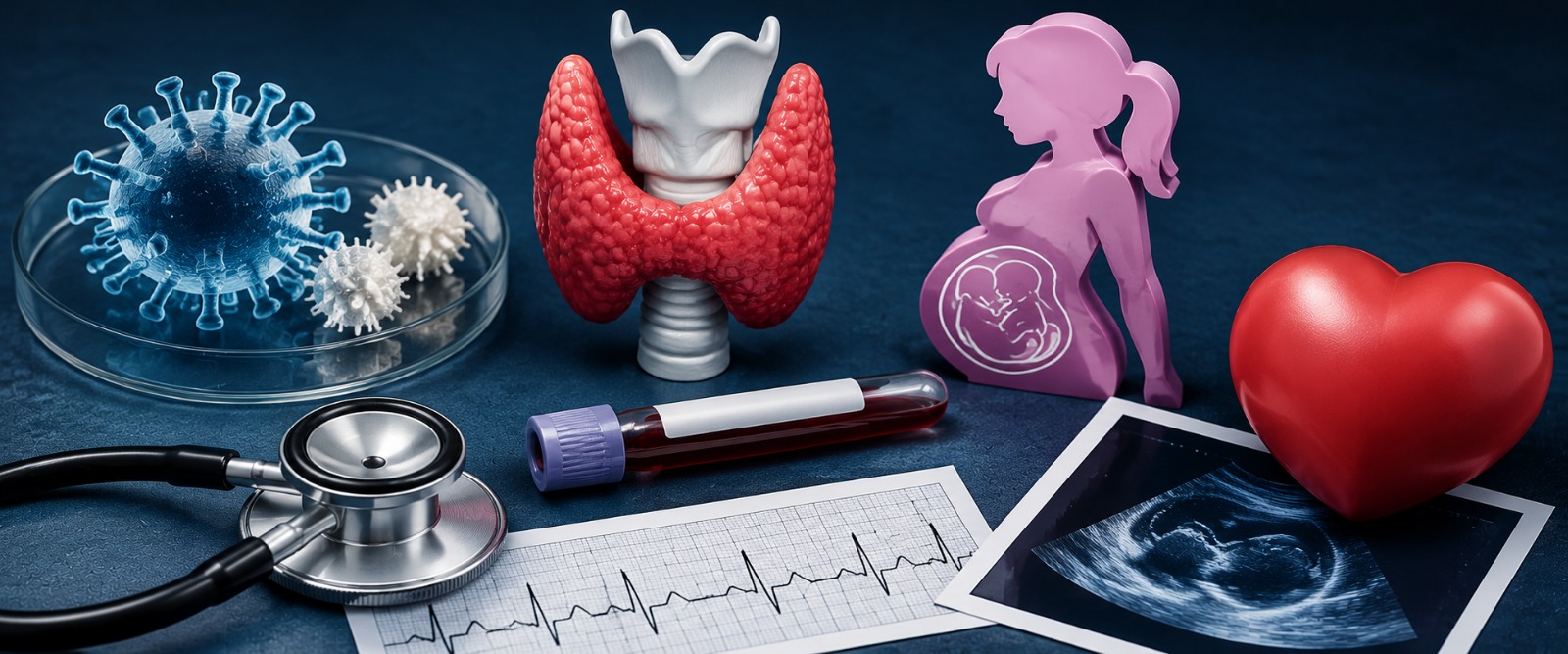
Viral myocarditis, an untreated thyroid and the peripartum period each weaken the pump. Happily, many of these recover fully.
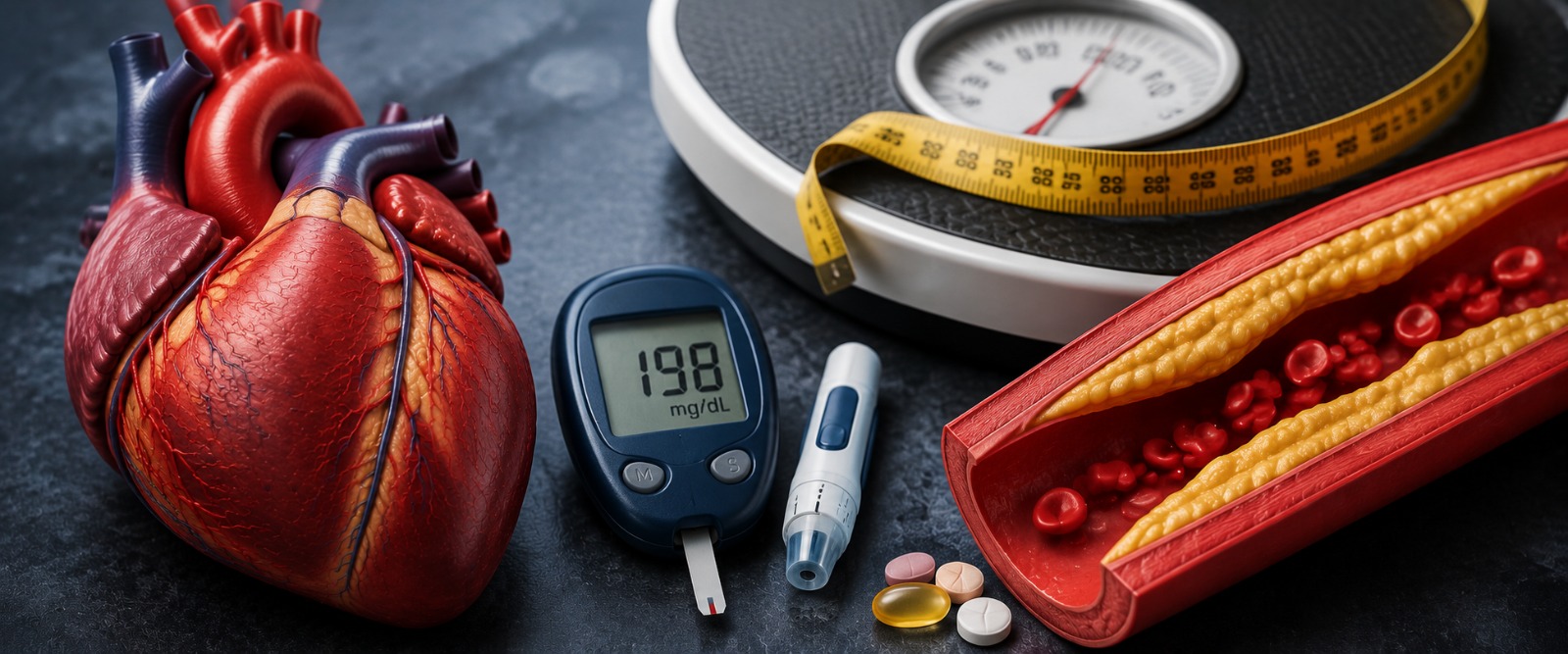
All three damage the muscle quietly over years. Moreover, they often travel together in the same patient.

Regular alcohol directly poisons heart muscle cells. Encouragingly, stopping early reverses a good part of that damage.
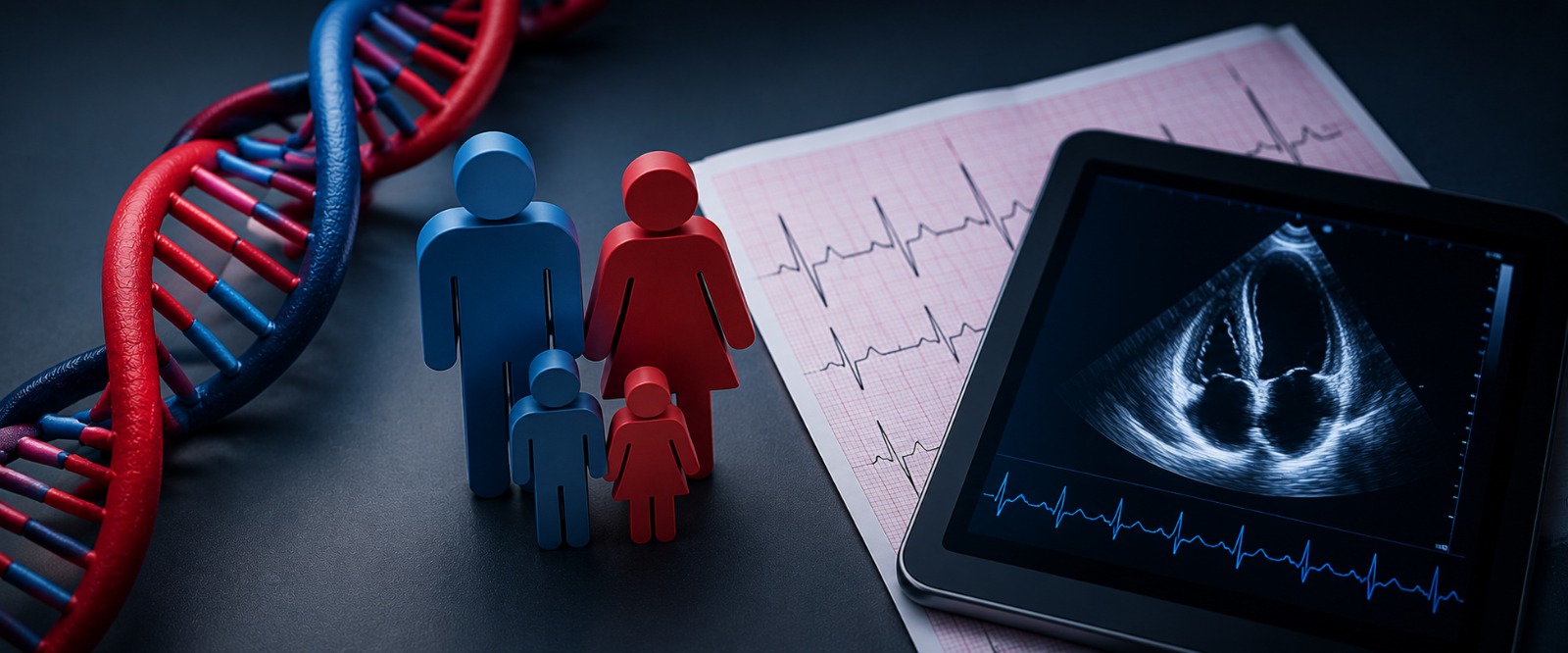
Hypertrophic and arrhythmogenic types run strongly in families. Therefore, we screen first-degree relatives with an ECG and echo.
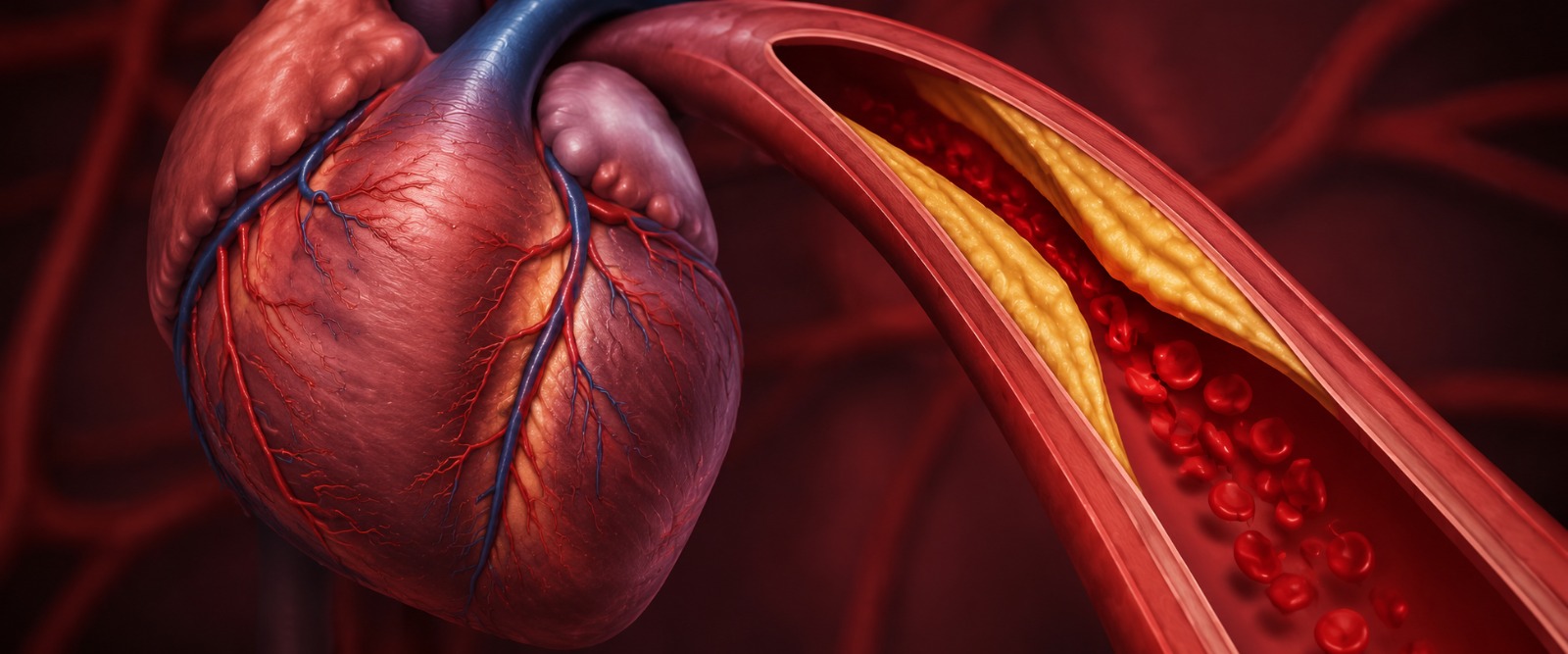
Blocked arteries starve the muscle of blood. Consequently, scarred segments stop contracting and the pump weakens.
Your cardiologist combines these based on your echo findings and overall risk profile.
Beta blockers, ACE inhibitors or ARNI, MRA tablets and SGLT2 inhibitors, raised gradually to target dose.
Diuretics clear fluid from the lungs and legs, alongside daily home weighing to catch it early.
Ongoing cholesterol and BP treatment — this clinic’s particular area of focus.
Where an ICD, pacemaker or CRT is indicated, implantation is arranged through our hospital attachments.
Supervised walking, matched to your ejection fraction and built up gradually as stamina returns.
A repeat echo every three to six months, because heart muscle disease needs review rather than a one-time prescription.
Medicines work far better when your kitchen supports them. Fortunately, small consistent changes deliver results within weeks.
A fixed sequence, in this order — each step decides whether the next one is needed.
Your symptoms, family history, alcohol intake and current tablets, often enough to suspect the diagnosis.
Checking pulse, blood pressure, neck veins, chest sounds and ankle swelling.
Electrical activity of the heart, plus thyroid, kidney function, sugar and a full lipid profile.
Chamber size, wall thickness and valve function. Crucially, this measures your ejection fraction.
A 24-hour rhythm recording at home, or a treadmill test grading your exercise capacity safely.
Arranged through our hospital attachments where the echo leaves a question unanswered.
Cardiomyopathy is not one illness. Rather, it is a family of conditions, and treatment changes sharply with the type involved.
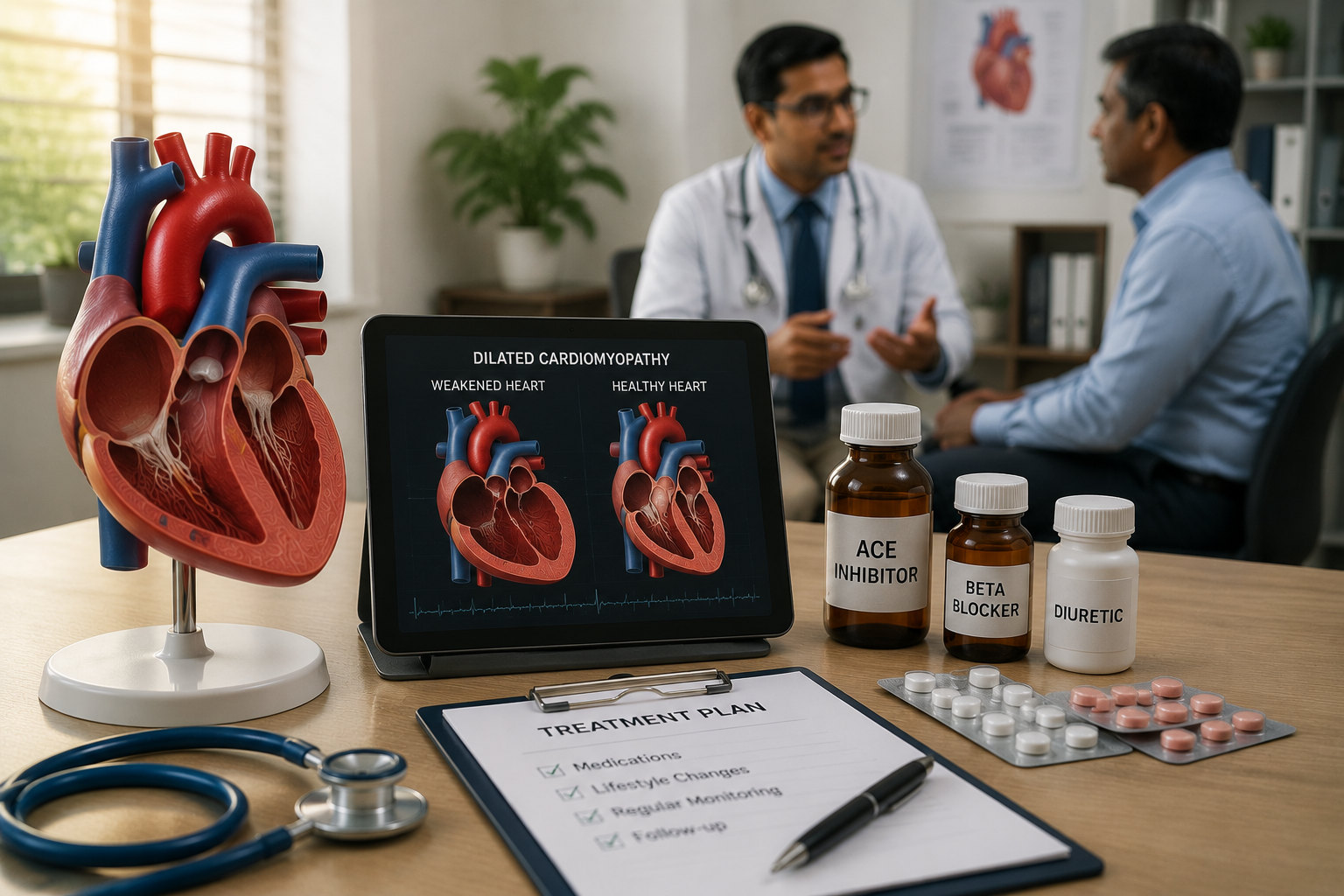
The main chamber stretches, so the pump weakens. Alcohol, viral illness, thyroid disorders and genetics commonly drive it. Many patients regain strength within six months of correct medicines.

The wall thickens abnormally and can block outflow. Young sportspersons sometimes carry it unknowingly. Hence family screening always forms part of the plan.
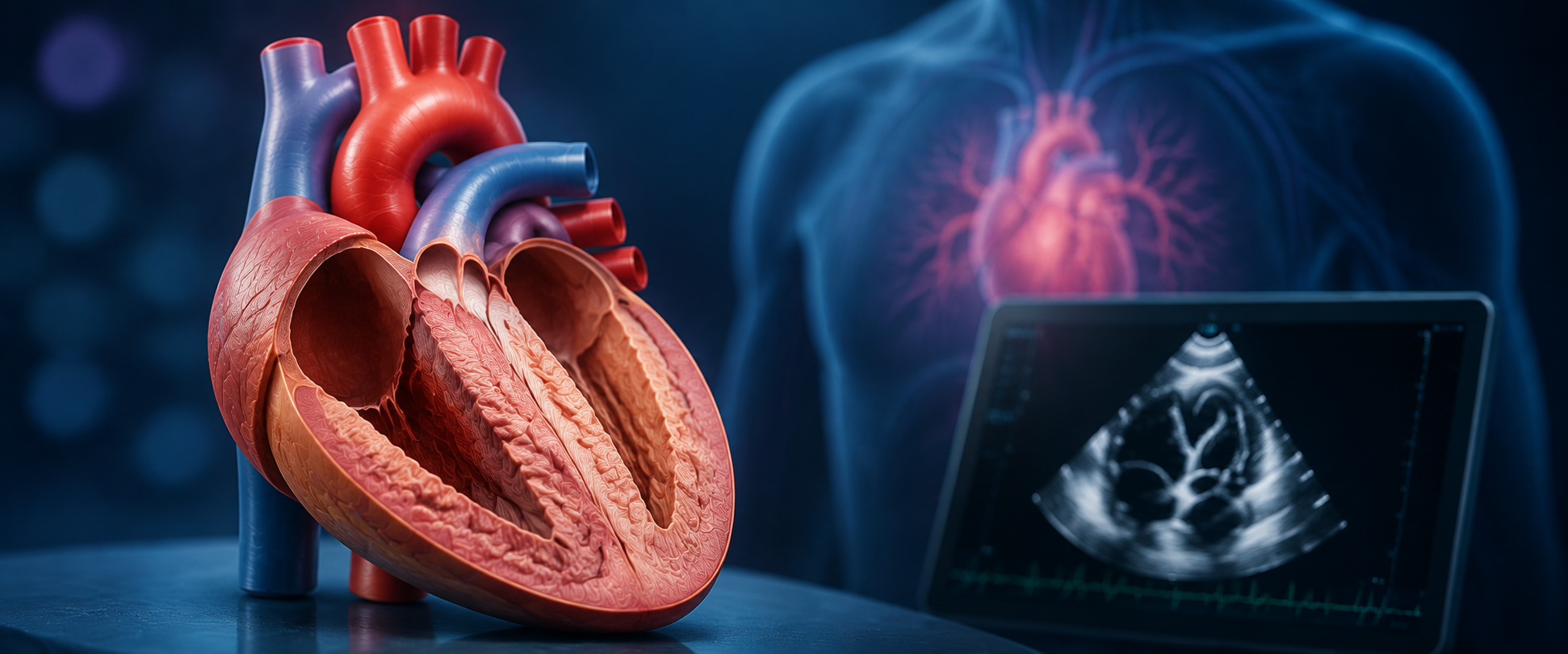
Stiff walls fill poorly between beats. Amyloid deposits, iron overload and past radiation may cause it. Although uncommon, early detection changes the outcome completely.
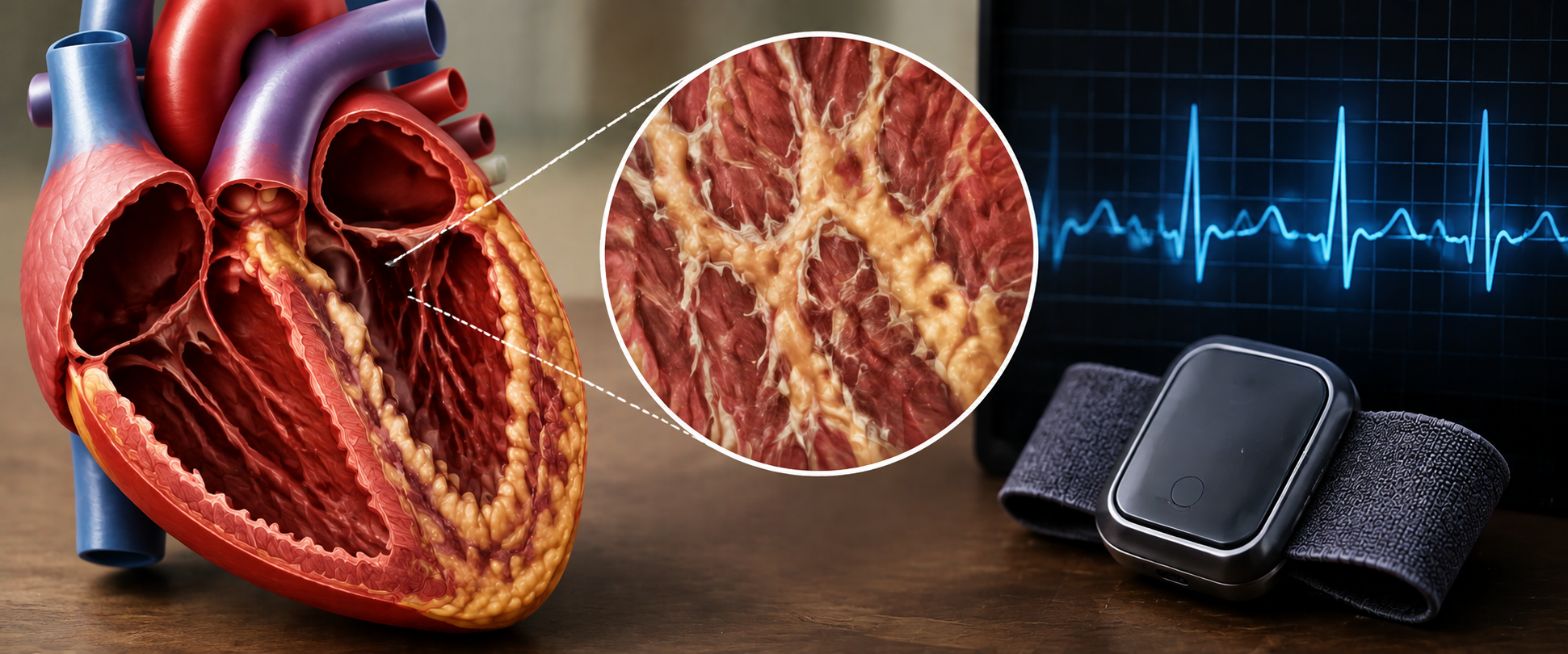
Fat and scar slowly replace healthy muscle. Palpitations and blackouts usually appear before any breathlessness. Rhythm monitoring therefore matters most here.
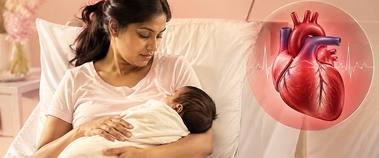
This form begins late in pregnancy or soon after delivery. Young mothers often mistake it for post-delivery weakness. Fortunately, most recover once treatment starts early.
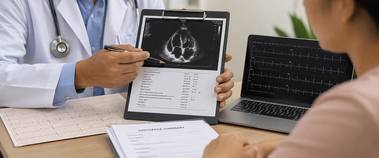
Bring your echo, ECG strips and discharge summaries along. We review everything calmly, without any pressure to switch. Afterwards, you know exactly what those numbers mean.
You do not need a referral to see a cardiologist for breathlessness at our KPHB Colony clinic, and you do not need to wait until it becomes severe.
Your evaluation, and the long-term plan it leads to, stays with the same two interventional cardiologists throughout.
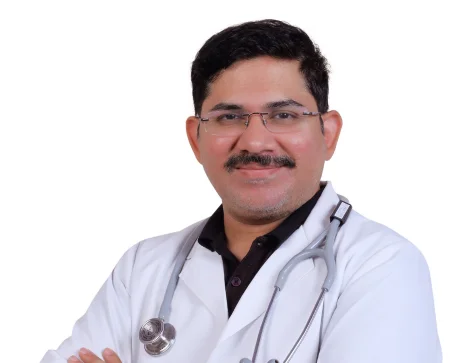
Senior Interventional Cardiologist — Gokul Heart & Cholesterol Clinic, KPHB · Senior Consultant Cardiologist, Apollo Hospitals. Formerly HOD of Cardiology at GEM’S Medical College.
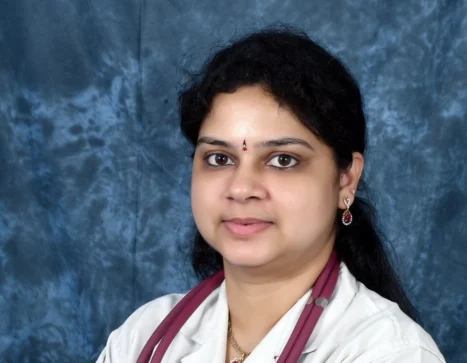
Interventional Cardiologist — Gokul Heart & Cholesterol Clinic, KPHB. Gold medallist in DM Cardiology at KNR University of Health Sciences, and a specialist in cholesterol and hypertension management.
If breathlessness, swelling or palpitations keep returning, one consultation can tell you why. Book Cardiomyopathy Treatment in KPHB with our interventional cardiologists.