Subtotal $0.00
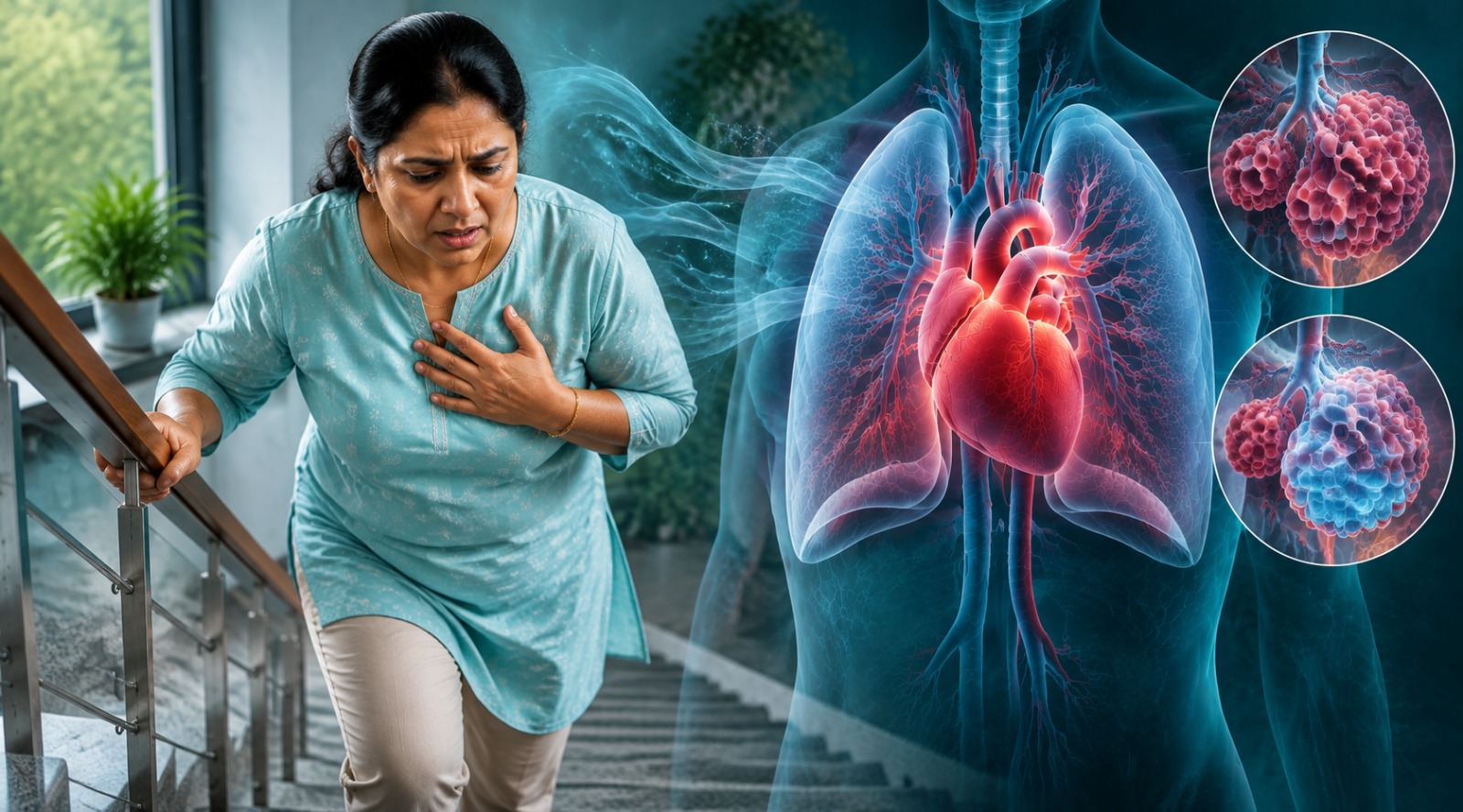
Breathlessness
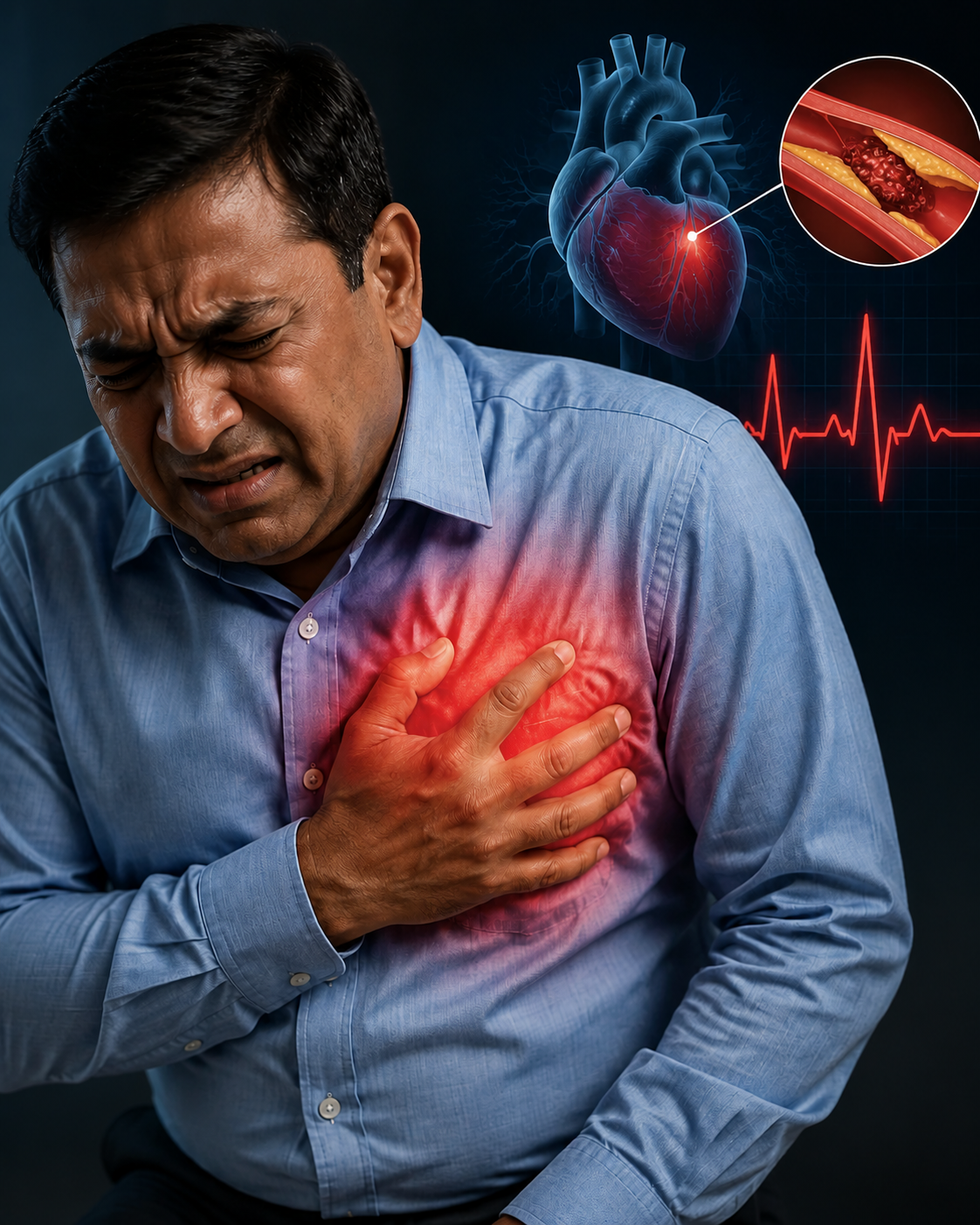
Shortness of breath during activity, and in later stages, even at rest.

Heart failure treatment in KPHB starts with a clear, cause-based diagnosis, not another water tablet for breathlessness that keeps returning. At Gokul Heart & Cholesterol Clinic, KPHB Colony, our interventional cardiologists carry out a full evaluation using ECG, 2D Echo and NT-proBNP, then treat what they find.
Mon – Sat 9:15–10:00 AM & 6:00–9:00 PM · Sunday 10:00 AM – 1:00 PM (By Appointment)
A heart failure evaluation answers one question: is your heart pumping well enough? A cardiologist takes your history, examines you, and tests the heart's pumping strength, filling pattern and electrical activity.
The same breathlessness can come from the heart, the lungs, anaemia or being unfit. Heart failure treatment in KPHB starts with knowing which — the reason most people look for a heart failure specialist in Kukatpally rather than adjust to it.
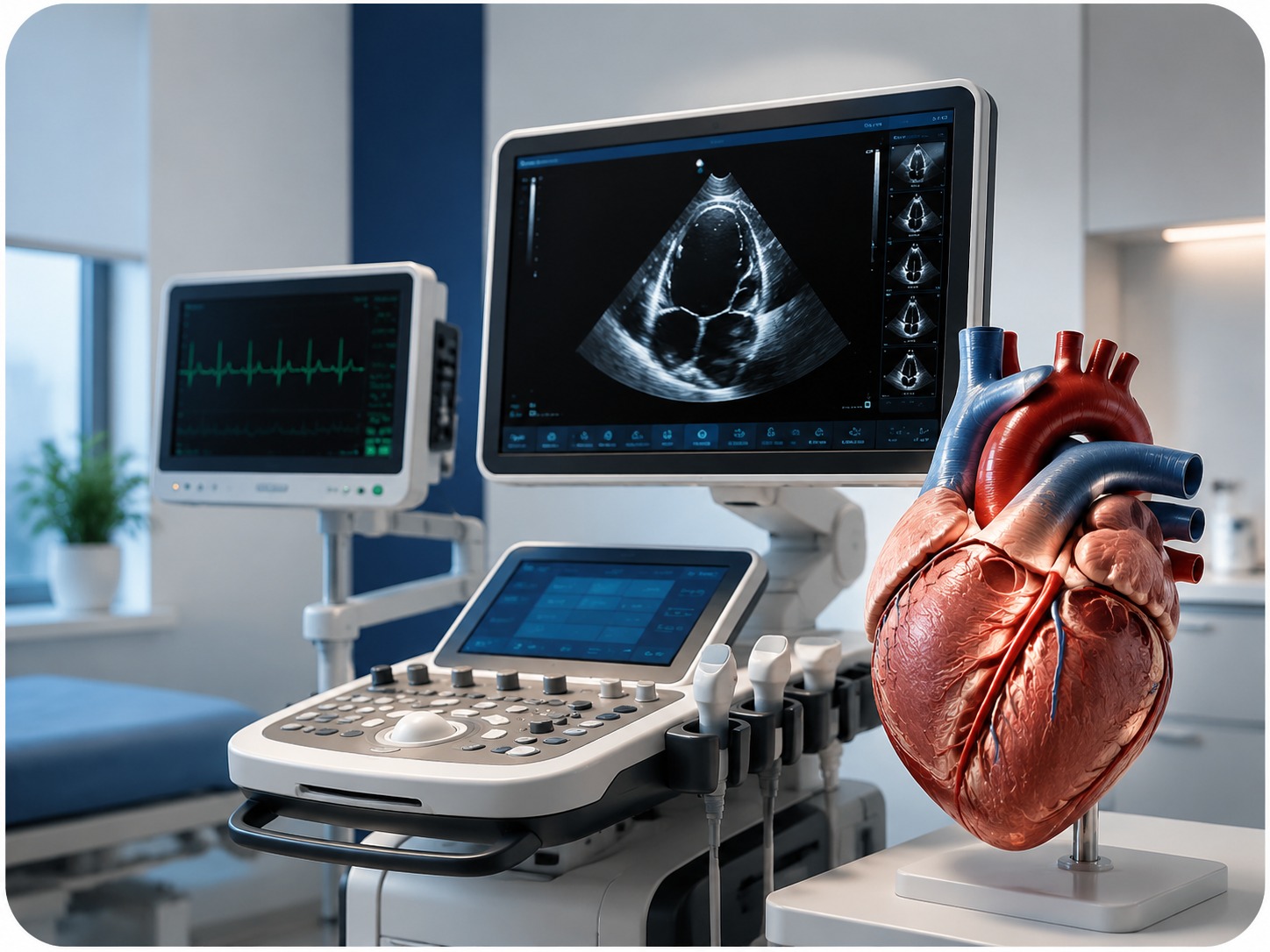
At our KPHB Colony clinic, interventional cardiologists run the evaluation themselves. Your ECG and 2D Echo are read by the same specialist who would treat the problem, usually in one visit, continuing as ongoing heart failure management where the findings call for it.
Occasional breathlessness after exertion is normal. Symptoms that repeat weekly, wake you at night, or keep returning despite medication are not — those are worth a consultation.
Shortness of breath during activity, and in later stages, even at rest.

Ongoing tiredness and a noticeable drop in exercise capacity.

Fluid build-up in the ankles, feet, or abdomen from poor pumping.
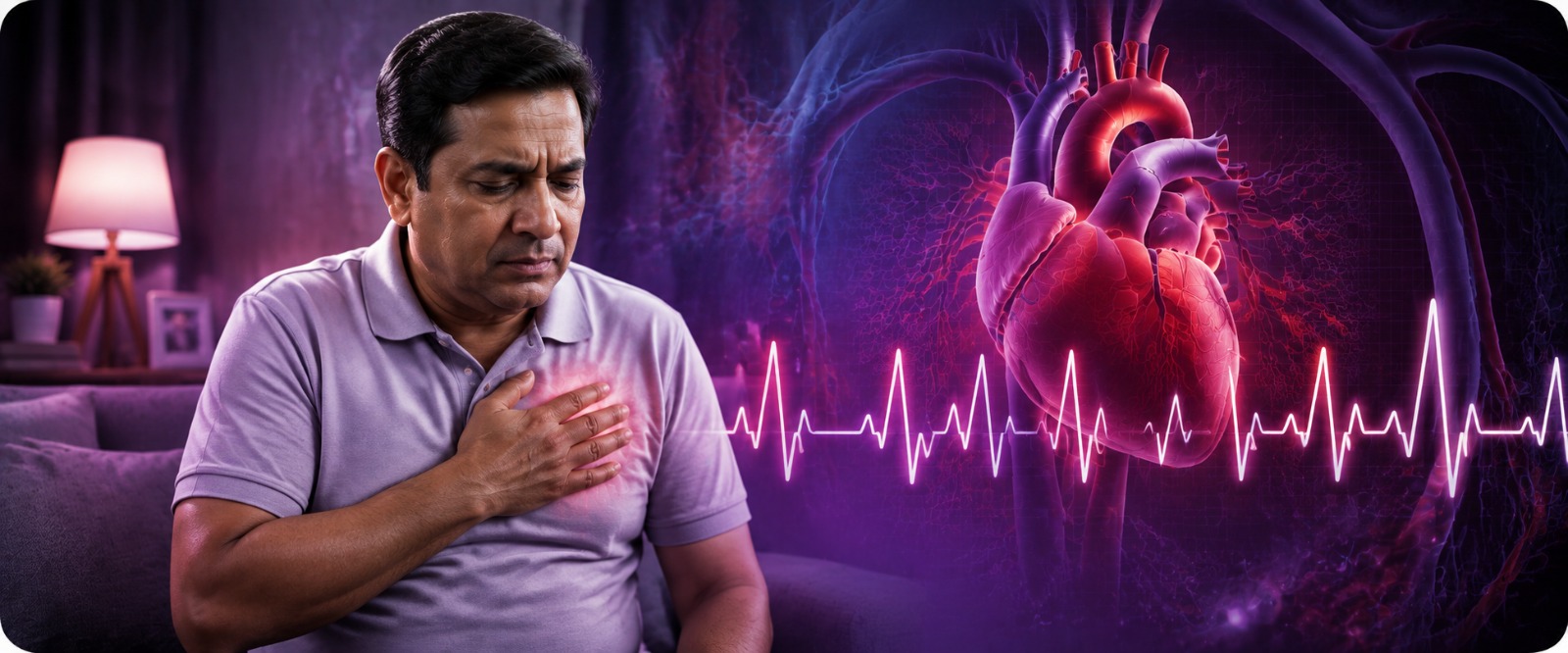
A racing, fluttering, or uneven pulse that you can feel yourself.

Breathlessness that worsens at night or when lying down (orthopnoea).
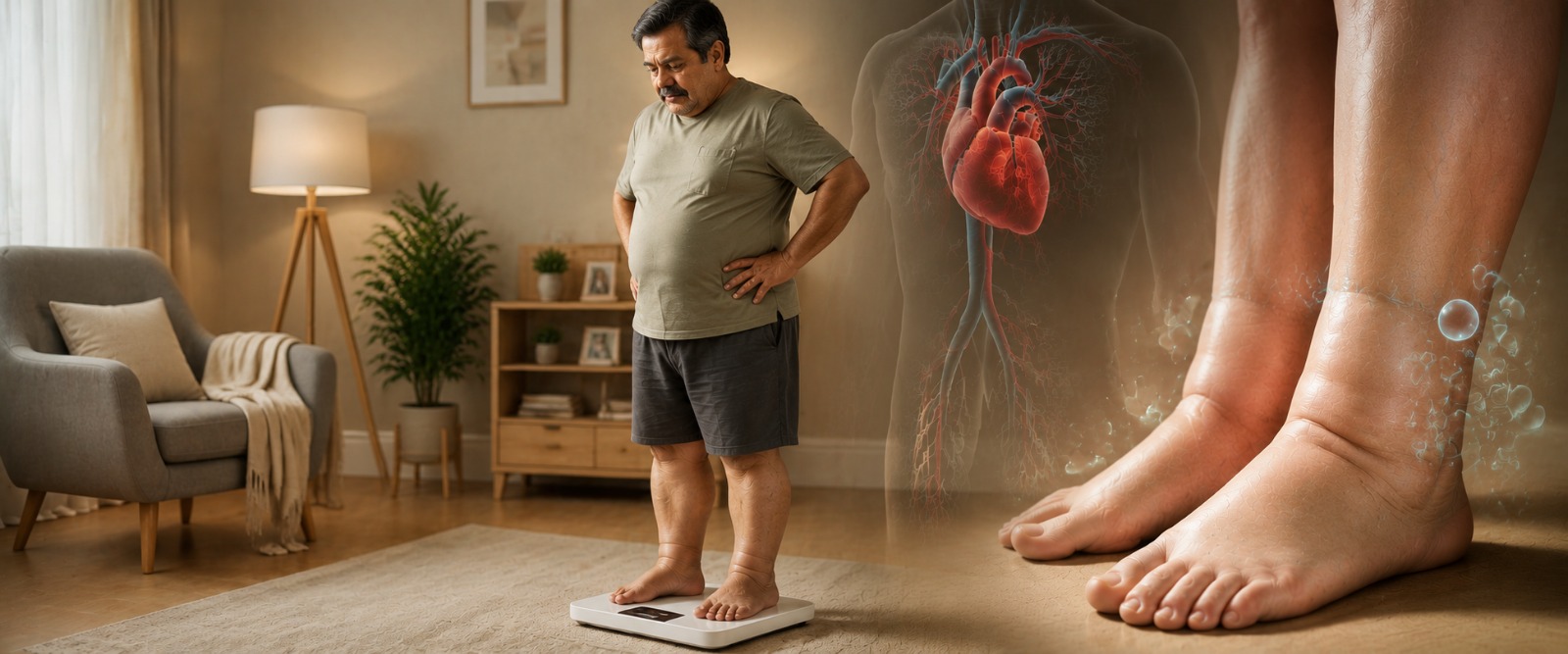
Rapid weight gain over a few days, usually from fluid retention.
Most patients arrive having already explained away their symptoms. The heart failure vs normal tiredness mix-up is the one people get wrong most often, and the wrong label is what costs weeks.
A vague sense of cardiac trouble
Usually refers to reduced ejection fraction, which a 2D Echo measures precisely
Swelling blamed on diet or salt
Often the first visible sign of fluid building up from poor pumping, not just diet
A line read off an X-ray or echo report
Means the heart has stretched to compensate — common in heart failure, confirmed on 2D Echo
Assumed to be a separate, worse condition
Same condition as heart failure; congestive describes the fluid build-up stage
Assumed to mean the heart has stopped
Means the heart pumps less effectively, not that it has stopped working
A general description patients use
Refers to reduced ejection fraction (HFrEF), one of two main types of heart failure
What patients call their diuretic
The medicine class that relieves fluid overload — treats a symptom, not the underlying cause
Often confused with a defibrillator
Corrects slow rhythms; a separate device (ICD) treats dangerously fast ones
Identifying which of these applies to you shapes the entire treatment plan.
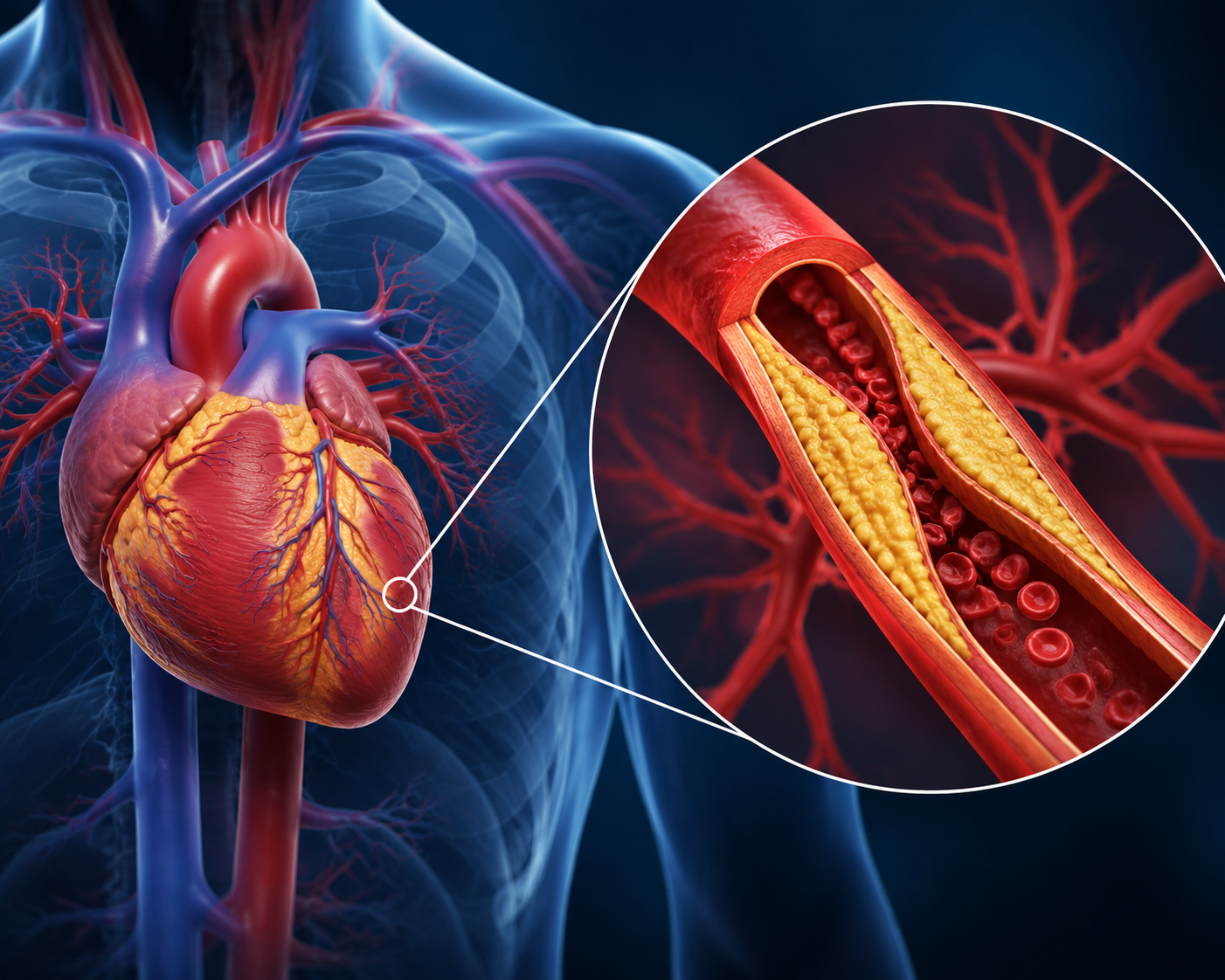
Cholesterol plaque builds up inside the arteries supplying the heart and narrows them. Blood flow is adequate at rest but falls short over time, gradually weakening the heart muscle.
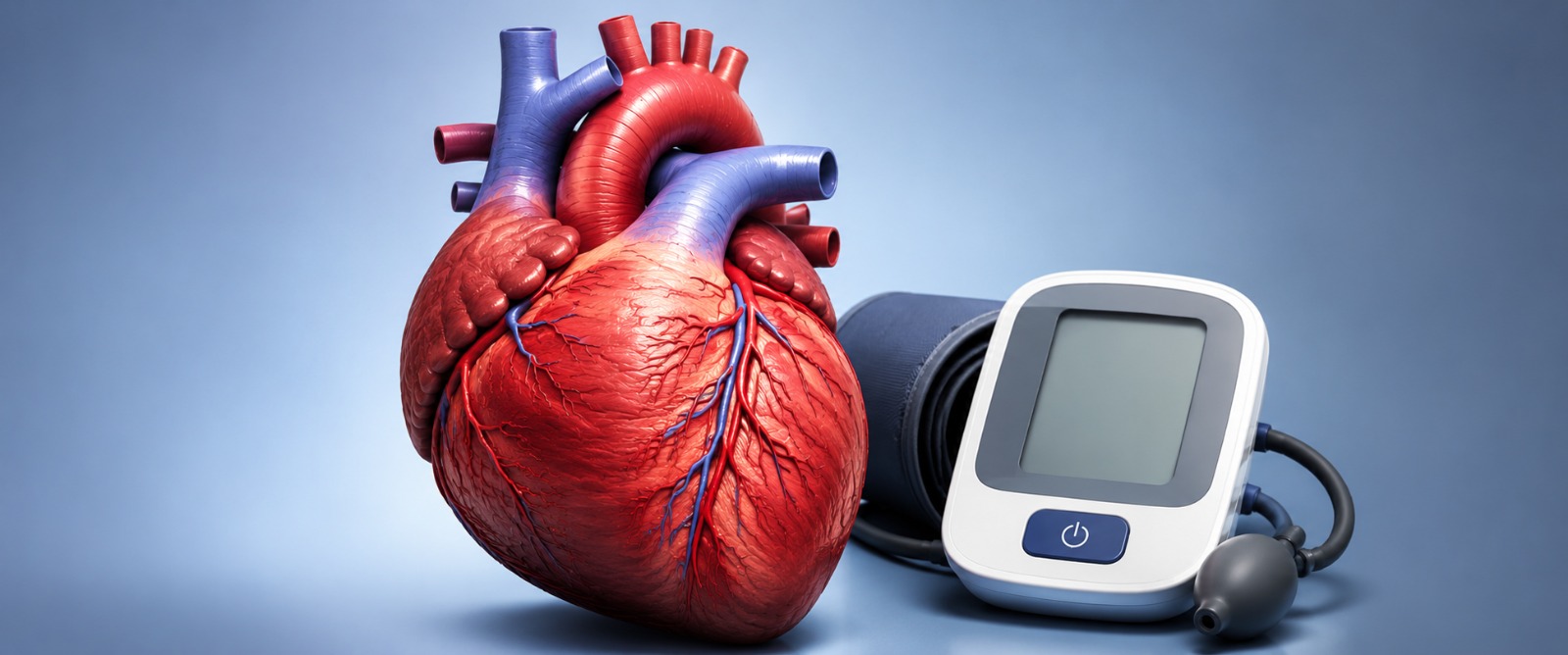
Uncontrolled hypertension forces the heart to work harder against resistance until it weakens.
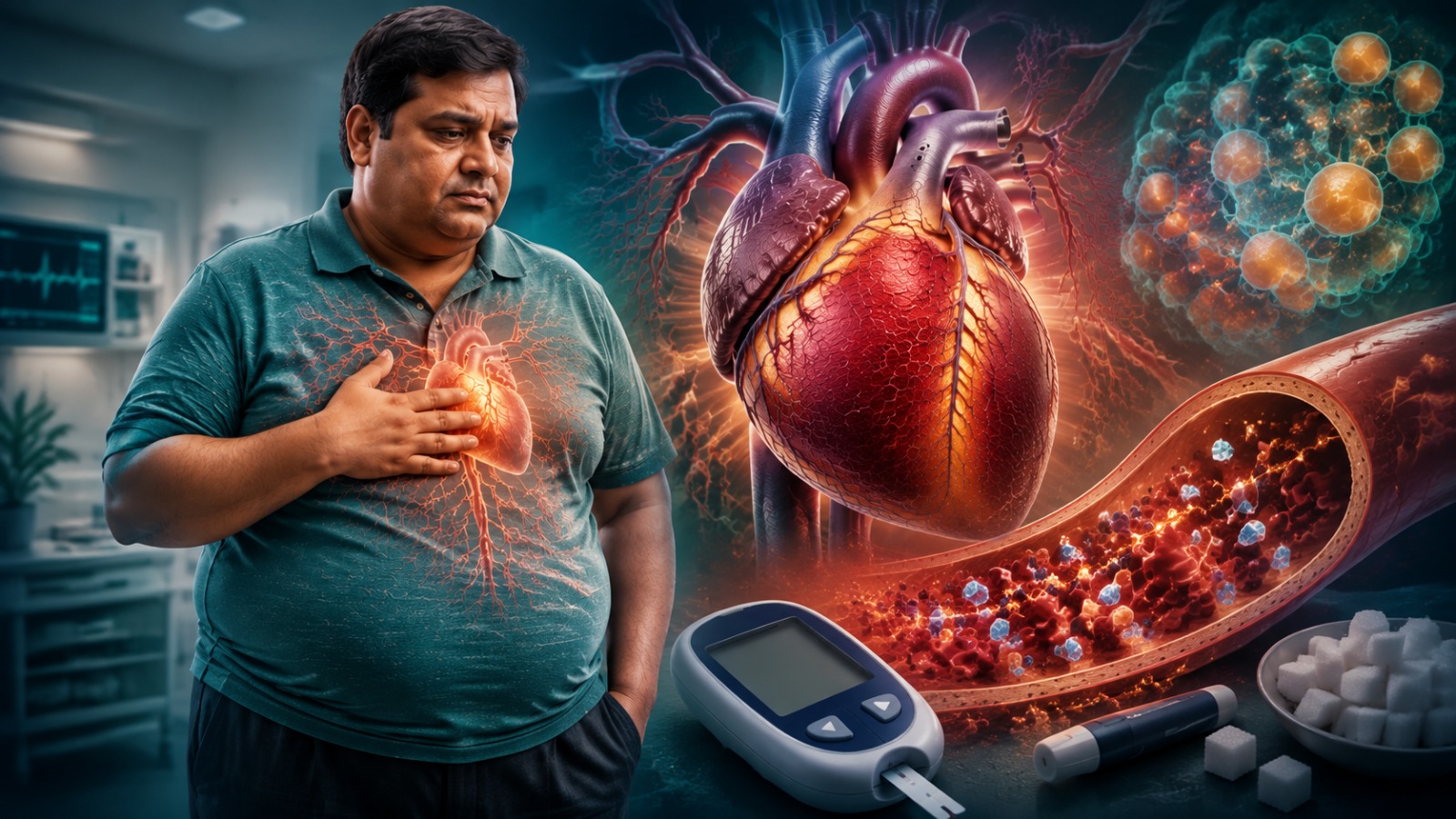
Both add strain to the cardiovascular system and accelerate damage to the heart muscle over time.
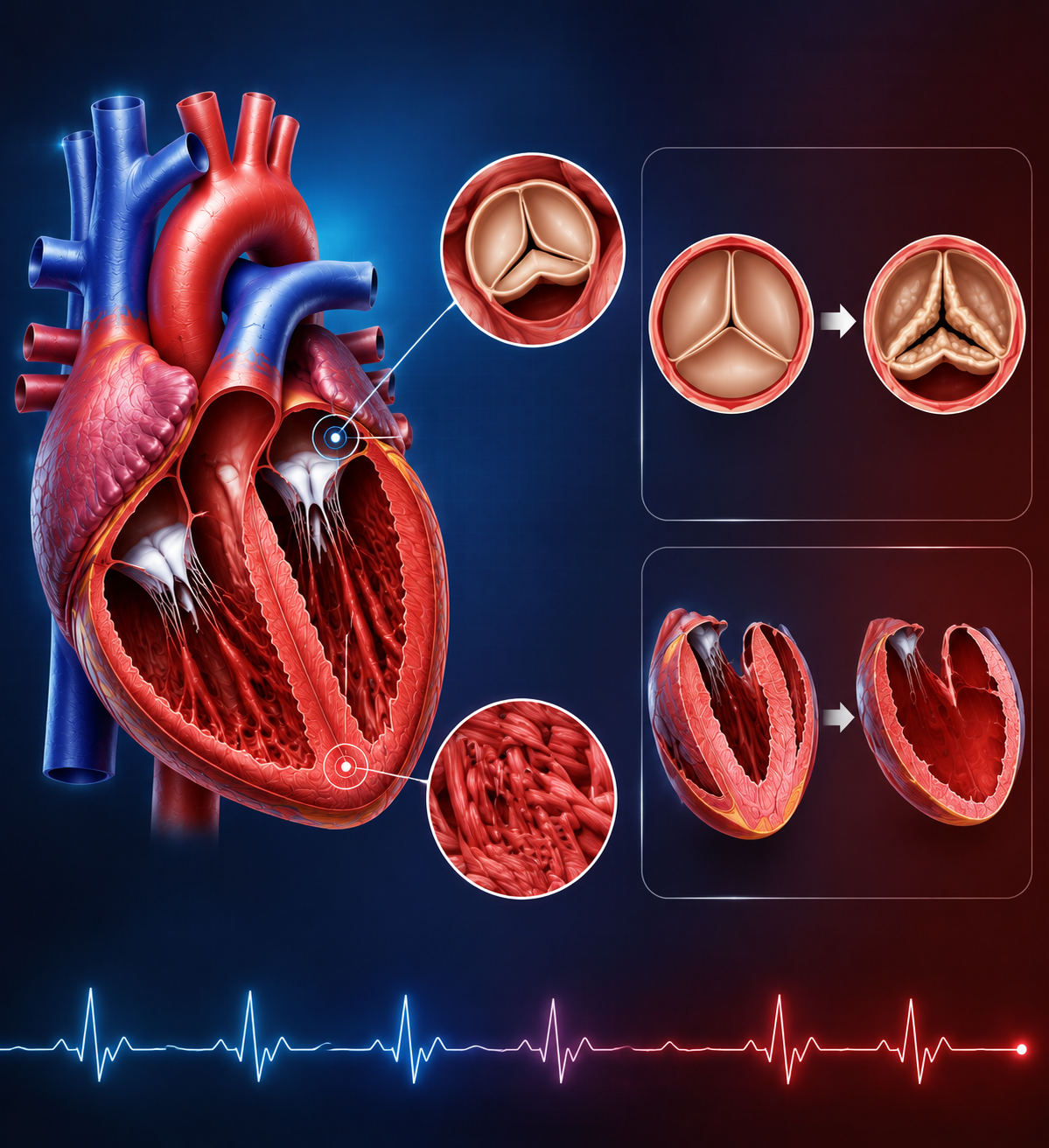
A narrowed or leaking valve, or a thickened or weakened heart muscle, forces the heart to work harder than it can sustain.
Scar tissue from an earlier blocked artery can weaken the heart's pumping ability permanently.
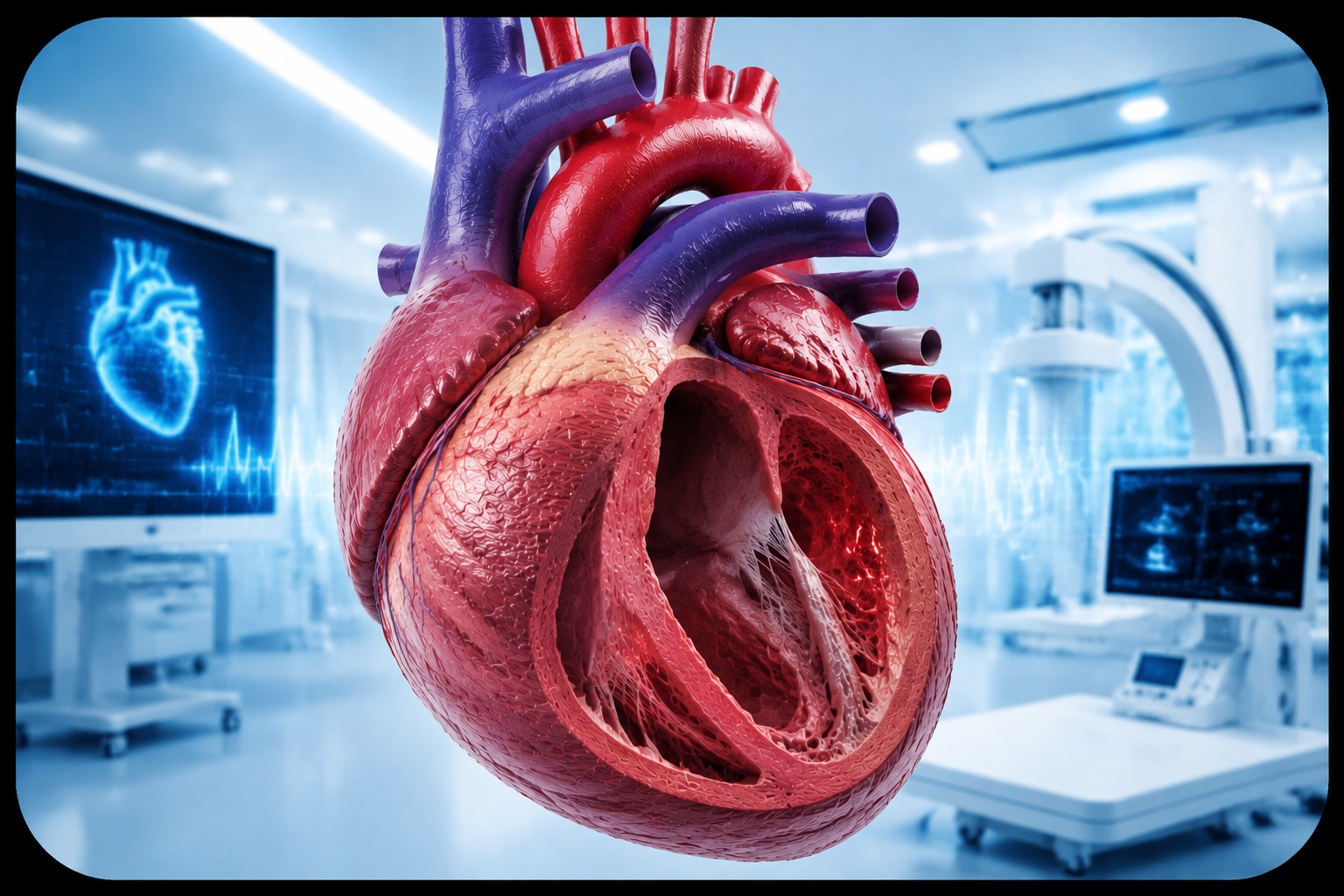
A disease of the heart muscle itself, sometimes with no blockage present at all.
A fixed sequence, in this order — each step decides whether the next one is needed.
Your symptoms, medical history, and current medicines, often enough to suspect the cause.
Checking for fluid, swelling, and heart or lung sounds that suggest heart failure.
A same-day ultrasound of the heart to check pumping strength and structure.
Electrical activity of the heart, plus NT-proBNP and other supporting blood work.
Assessing how your heart performs under exertion, in select cases.
Your cardiologist combines these based on your specific type and stage of heart failure.

ACE inhibitors, ARBs, beta-blockers, diuretics, and SGLT2 inhibitors, tailored to you.

Salt reduction, fluid management, and activity tailored to your condition.

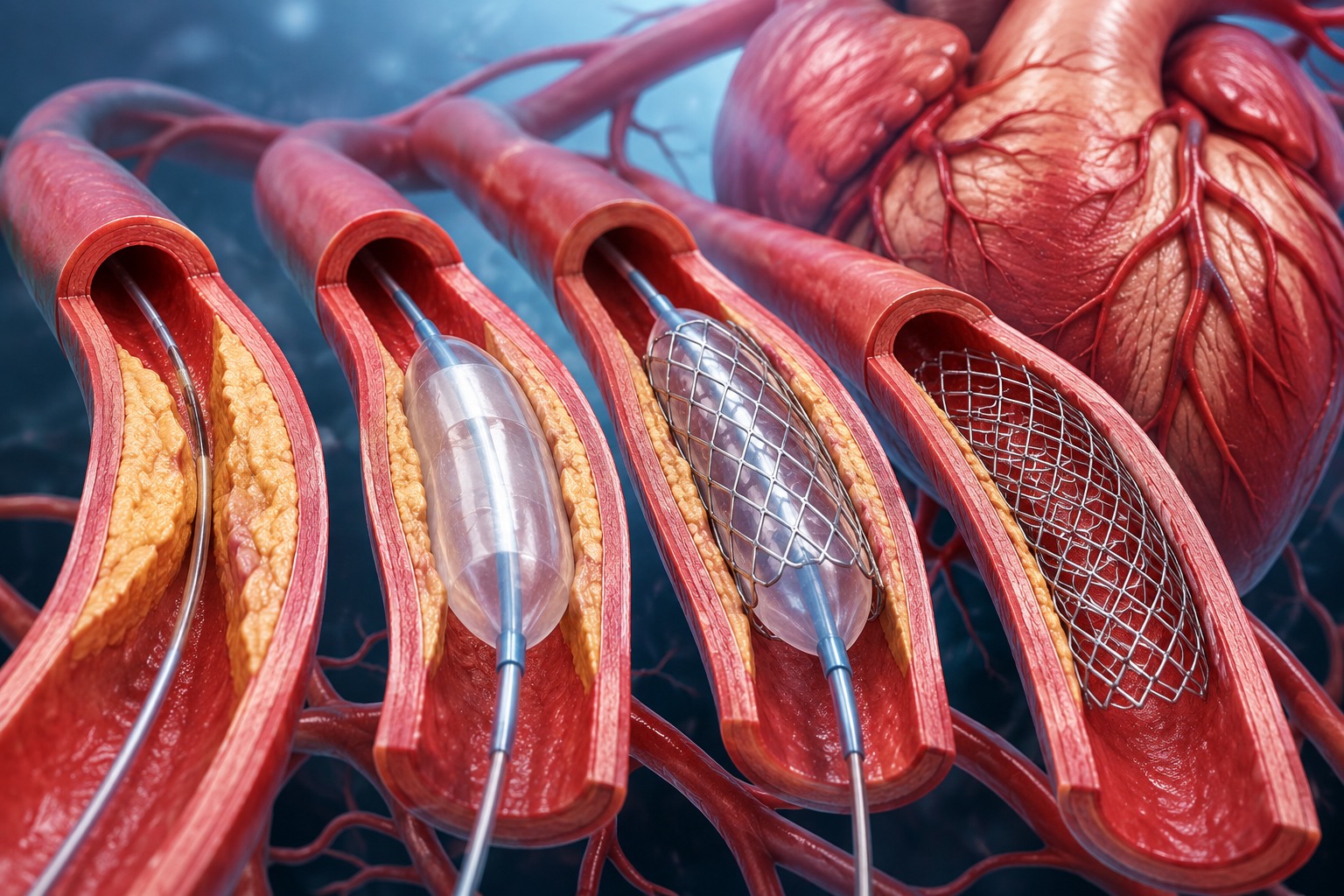
Angioplasty and stenting where blocked arteries are contributing to your symptoms.
Pacemakers, ICDs, and CRT for patients whose rhythm or pumping needs support.

Coordinated IV therapy when oral medicines are not enough during a flare-up.

Recognition and referral for LVAD or transplant evaluation where indicated.
You do not need a referral to see a cardiologist for heart failure symptoms at our KPHB Colony clinic, and you do not need to wait until the breathlessness is severe.
Your evaluation is carried out by the same interventional cardiologists who would manage whatever the tests find.

Senior Interventional Cardiologist — Gokul Heart & Cholesterol Clinic, KPHB · Senior Consultant Cardiologist, Apollo Hospitals. Formerly HOD of Cardiology at GEM’S Medical College.

Interventional Cardiologist — Gokul Heart & Cholesterol Clinic, KPHB. Gold medallist in DM Cardiology at KNR University of Health Sciences, and a specialist in cholesterol and hypertension management.
If breathlessness or swelling keeps returning, one consultation can tell you why. Book heart failure treatment in KPHB with our interventional cardiologists.