Subtotal $0.00

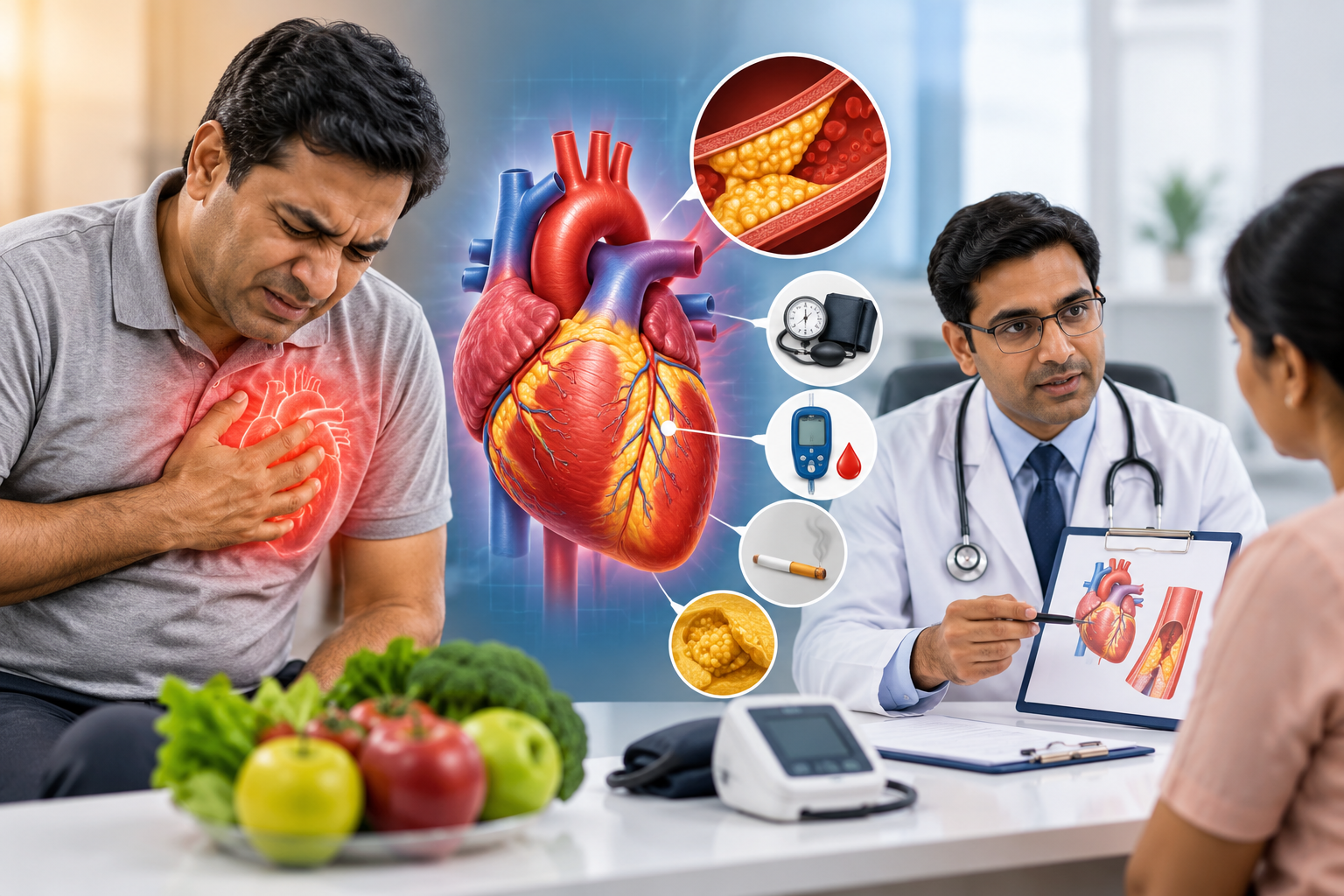
A heart attack risk assessment shows your chance of having a heart attack in the coming years. Most heart attacks do not come out of the blue. Instead, they build up silently over many years through high cholesterol, high BP, diabetes and smoking. Because these problems rarely cause symptoms early, many people learn about them only after a heart attack.
However, a simple check-up can find them much sooner. At Gokul Heart & Cholesterol Clinic in Hyderabad, our heart specialists use this check to spot danger early. Then, they plan care that suits your body and lifestyle. This guide explains who needs a heart attack risk assessment and which tests the doctor uses. It also shows how to lower your risk.
What Is a Heart Attack Risk Assessment?
A heart attack risk assessment is a planned check of your heart health and risk factors. During the visit, a cardiologist studies your history, habits and test reports. After that, the doctor combines all this information to estimate your risk for the next 10 years. Doctors also call this a cardiac risk evaluation or a heart risk check.
Most results fall into a low, moderate or high risk group. Your treatment plan then depends on this group. For example, a person at low risk may only need healthy habits and a yearly review. On the other hand, a person at high risk may need medicines and closer follow-up.
Why a Heart Risk Check Matters in India
Worldwide, heart and blood vessel diseases kill more people than any other illness. In fact, WHO data put the toll at 19.8 million deaths in 2022. Heart attacks and strokes caused 85% of them. Moreover, studies show that Indians develop heart disease 5 to 10 years sooner than many other groups.
Even so, most of this damage is preventable. According to WHO, tackling tobacco, poor diet, inactivity and alcohol can prevent most heart and blood vessel disease. That is why an early heart attack risk assessment matters so much. It gives you time to act before your arteries become badly blocked.
Heart Attack Risk Factors You Should Know
Your heart attack risk factors fall into two groups. Some you can change, while others you cannot. A good heart attack risk assessment looks at both groups together.
Risk Factors You Can Change
- High cholesterol: Extra LDL (“bad”) cholesterol slowly builds up as plaque inside the heart arteries.
- Smoking and tobacco: Cigarettes, beedis and gutka narrow and harden your arteries.
- High BP: Constant high blood pressure damages artery walls over time.
- Diabetes: High sugar speeds up artery damage and may make heart attack symptoms silent.
- Belly fat: A large waist raises your risk, even when your weight looks normal.
- Inactivity: Long hours of sitting push up sugar, BP and weight.
- Stress and poor sleep: Ongoing stress and short sleep can raise BP and strain the heart.
- Alcohol: Heavy drinking raises BP and triglycerides.
Risk Factors You Cannot Change
- Age: Risk rises after 45 in men and after 55 in women.
- Family history: A parent or sibling with early heart disease raises your own risk.
- Gender: Men usually face risk earlier, although women catch up after menopause.
- Ethnicity: As South Asians, Indians tend to get heart disease at a younger age.
Cholesterol and Heart Attack Risk
Cholesterol needs special attention because it rarely causes symptoms. LDL cholesterol slowly forms plaque that narrows your heart arteries. When a plaque bursts, a clot forms and blocks blood flow. As a result, part of the heart muscle starts to die, and this is a heart attack.
Besides LDL, your doctor also checks HDL, triglycerides and sometimes lipoprotein(a). In addition, Indian data show that high lipoprotein(a) is more common in Indians than in Western populations. So, if your numbers are high, a cholesterol doctor can plan the right high cholesterol treatment for you.
Who Needs a Heart Attack Risk Assessment?
Every adult can benefit from a heart risk check. However, you should book a heart attack risk assessment soon if you have any of the following:
- Age above 40, even if you feel fit
- Diabetes, high BP or high cholesterol
- A parent or sibling who had a heart attack before 55 (men) or 65 (women)
- Smoking or tobacco chewing
- Extra weight, especially around the waist
- Breathlessness, tiredness or chest discomfort during activity
- Plans to start a new gym or sports routine after 35
- Kidney disease or a past stroke
Also, the Cardiological Society of India suggests a first cholesterol test at age 18. Earlier testing makes sense when heart disease runs in the family.
Heart Attack Risk in Young Adults
Heart attacks no longer affect only older people. In fact, the average Indian has a first heart attack at about 53 years of age. This is earlier than in many other countries. Several modern habits push this age down further. Long work hours, late nights, fast food, smoking and little exercise all add up.
Moreover, some young people carry an inherited cholesterol problem called familial hypercholesterolaemia without knowing it. For this reason, young adults with any risk factor should get a heart attack risk assessment before symptoms appear. Indeed, a simple cardiac screening in your 20s or 30s can show problems early, when they are easiest to fix.
Tests for Heart Attack Risk Assessment
A heart attack risk test is not one single test. Instead, your doctor chooses a set of simple checks based on your age, symptoms and history. Most tests in a heart attack risk assessment are quick, safe and painless.
Basic Check-up and Blood Tests
First, the doctor measures your BP, weight, waist size and pulse. Next, a few blood tests show what is happening inside your body.
Lipid Profile (Cholesterol Test)
This blood test measures total cholesterol, LDL, HDL and triglycerides. It is the most important test in any heart attack risk assessment. In most cases, you do not need to fast for it. Still, follow the instructions your doctor gives you.
Blood Sugar and HbA1c
These tests look for diabetes or prediabetes. HbA1c shows your average sugar level over the past three months. If needed, your doctor may also order kidney and thyroid tests.
Heart Tests: ECG, 2D Echo and TMT
These tests show how well your heart works and how it handles effort.
ECG
An ECG records the electrical activity of your heart in about five minutes. It can show an old heart attack, rhythm problems or strain on the heart.
2D Echo
A 2D Echo is an ultrasound scan of the heart. It shows the size of the heart, its pumping strength and the valves. Like an ECG, it uses no radiation and causes no pain.
TMT (Treadmill Test)
During a TMT, you walk on a treadmill while the ECG keeps recording. The speed and slope rise every few minutes. If blood flow to the heart is poor, the ECG often shows changes during effort. Thus, a TMT can reveal signs of a blockage that a resting ECG may miss.
How to Prepare for a TMT
- Wear comfortable shoes and loose clothes.
- Eat a light meal two to three hours before the test.
- Bring all your current medicines and old reports.
- Ask your doctor before stopping any BP or heart medicine.
Is a TMT Safe?
A TMT is safe for most people. Still, the team watches your ECG and BP throughout and stops the test if you feel unwell. Moreover, a doctor stays close by during the entire test.
Extra Tests Your Doctor May Suggest
Sometimes, your doctor needs more details. In that case, a Holter monitor records your heart rhythm for 24 to 48 hours. Similarly, ABPM tracks your BP across a full day and night. If these tests suggest a blockage, the doctor may then advise a coronary angiogram.
How to Check Heart Attack Risk: Steps at Our Clinic
Many people wonder how to check heart attack risk without a long hospital stay. Fortunately, the process is simple and usually needs only one or two short visits. Here is how a heart attack risk assessment works at Gokul Heart & Cholesterol Clinic:
- Book your visit: Call or WhatsApp us on 89196 07118, or book online.
- Share your history: The cardiologist asks about symptoms, habits, medicines and family history.
- Basic examination: Next, the doctor checks your BP, pulse, weight and waist size.
- Take the tests: You then complete the blood tests and heart tests the doctor advises.
- Know your result: Your reports help the doctor place you in a low, moderate or high risk group.
- Receive your plan: Finally, you get a clear plan for diet, exercise, medicines and follow-up.
Please bring your old reports, past ECGs and a list of your medicines to your heart attack risk assessment. Because the doctor can compare old and new results, this helps track changes over time.
Preventive Cardiology: How to Lower Your Risk After the Assessment
A heart attack risk assessment is only the first step. The real benefit comes from acting on the results. In short, this is the main goal of preventive cardiology at our clinic.
Simple Daily Habits That Protect Your Heart
- Walk briskly for at least 30 minutes on most days.
- Fill half your plate with vegetables, fruit, dal and sprouts.
- Cut down on sugar, white rice, maida, fried snacks and sweets.
- Use less salt, pickle and papad.
- Quit smoking and all forms of tobacco.
- Sleep for seven to eight hours each night.
- Manage stress with yoga, prayer, hobbies or time with family.
- Keep alcohol to a minimum, or avoid it completely.
Even small changes add up over time. For instance, losing a few kilos can improve your BP, sugar and cholesterol together.
When Do You Need Medicines?
Lifestyle changes are powerful, but they are not always enough. If your heart attack risk assessment shows moderate or high risk, your heart specialist may add medicines. For example, statins lower LDL cholesterol, while other tablets control BP and sugar. Some people may also need aspirin, but only when the doctor advises it.
Above all, never start or stop heart medicines on your own. Instead, attend regular follow-up visits so the doctor can adjust your treatment safely.
Warning Signs That Need Urgent Care
A heart attack risk assessment is a planned check for people without an emergency. However, some symptoms need help right away. Call 108 for an ambulance or go to the nearest emergency room 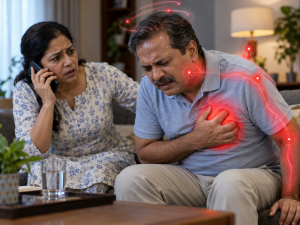 if you notice:
- Pain, pressure or tightness in the centre of the chest
- Discomfort that spreads to the arms, left shoulder, jaw or back
- Sudden breathlessness
- Cold sweat, nausea or vomiting
- Dizziness or fainting
Every minute counts during a heart attack, so do not drive yourself to the hospital. Also, WHO notes that women often feel breathless or feel like vomiting, or get jaw and back pain. Similarly, people with diabetes may feel only mild discomfort.
FAQ’s
How long does a heart attack risk assessment take?
The consultation and basic tests usually take a few hours. However, some blood reports may arrive the next day. Your doctor then explains the results in a short follow-up visit.
Do I need to fast before a heart attack risk test?
Usually, you do not need to fast for a lipid profile anymore. Even so, a fasting sugar test still needs an empty stomach. So, check with the clinic when you book.
At what age should I get a heart risk check?
Indian guidelines suggest a first cholesterol test at age 18. After that, how often you test depends on your risk. Your cardiologist will suggest the right gap for you.
Can young people have a heart attack?
Yes. Smoking, stress, diabetes, high cholesterol and family history can cause heart attacks even in the 30s. That is why young adults with risk factors should not skip a heart attack risk assessment.
Is a normal ECG enough to rule out heart attack risk?
No. A resting ECG can look normal even when blockages exist. For this reason, doctors combine the ECG with blood tests, a TMT or a 2D Echo when needed.
How often should I repeat a heart attack risk assessment?
It depends on your result. People at low risk may repeat it every few years, while people at high risk need closer follow-up. Your heart specialist will set the right schedule for you.
Where can I get a heart attack risk assessment?
You can book one at Gokul Heart & Cholesterol Clinic in Hyderabad. Simply call or WhatsApp 89196 07118 to fix a time.
Conclusion: Book Your Heart Attack Risk Assessment
A heart attack rarely happens without warning signs inside the body. Instead, high cholesterol, high BP, diabetes and smoking build up quietly for years. A timely heart attack risk assessment brings these hidden dangers to light. Then, with simple tests and the right plan, you can lower your risk and protect your family’s future.
At Gokul Heart & Cholesterol Clinic, our cardiologists offer cardiac screening, preventive cardiology and high cholesterol treatment under one roof. So, whether you are 25 or 65, do not wait for chest pain. Call or WhatsApp 89196 07118 today to book your check with a trusted heart specialist.

